Post-prosthetic treatment recommendations
Learn more
Important:
Success in prosthetic treatment is guaranteed only upon completion of the full treatment plan; specifically, it is necessary to provide full restoration for both dental arches (the completeness requirement). Implementing an incomplete restoration often leads to an exacerbation of existing problems.
Recommendations for the use of a removable prosthesis
This is the most important part for the patient, and at the same time, a topic often treated too briefly by the competition. Below are practical rules that actually affect the comfort and durability of the treatment.
How to eat in the first few days?
At the beginning, it is best to choose foods that are:
- soft,
- lukewarm,
- easy to chew,
- cut into small pieces.
It is worth chewing bilaterally to distribute the pressure evenly. It is better to avoid very hard, sticky, and chewy foods.
How to speak more clearly?
A good exercise is reading aloud for a few minutes a day. This helps the tongue and cheek muscles get used to the new situation in the oral cavity faster.
Should the prosthesis also be worn at night?
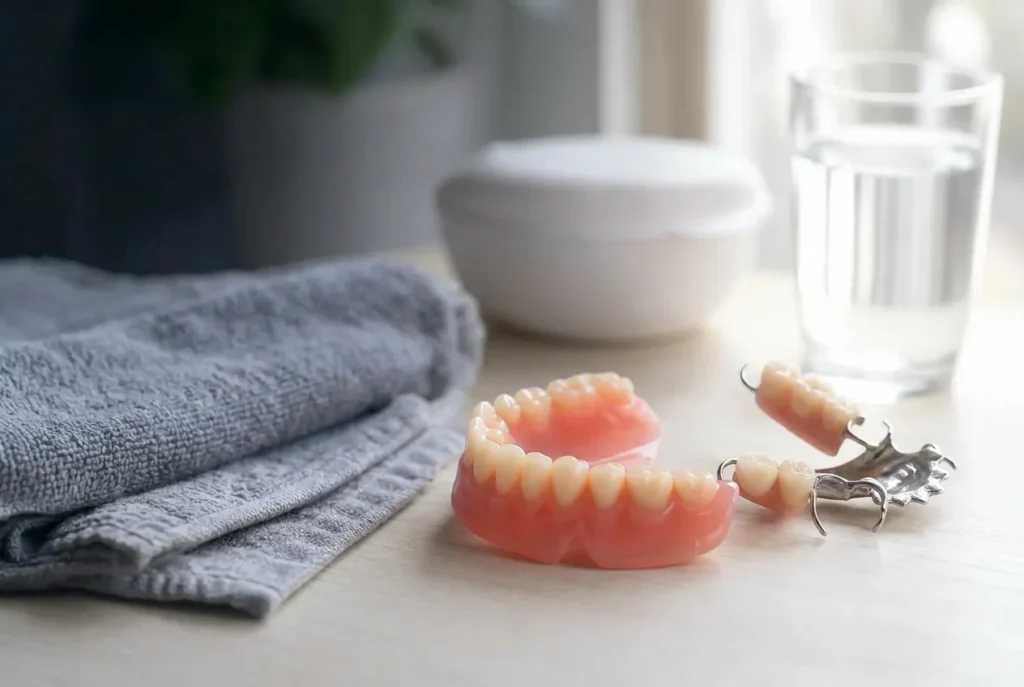
This depends on the doctor's recommendations. In many cases, at the beginning, the patient may receive individual instructions on temporary wearing of the prosthesis also for longer periods during the day, but ultimately the mucous membrane should usually have time to rest. The final recommendation always depends on the type of prosthesis and clinical conditions.
How to clean the prosthesis?
The prosthesis should be cleaned codziennie, gently and systematically.
The most important rules:
- wash the prosthesis after meals or at least in the morning and evening,
- use preparations designed for prostheses or a soft-bristled brush,
- do not clean the prosthesis with aggressive agents or boiling water,
- also clean the tongue, gums, and palate,
- do not forget about your remaining natural teeth.
Combining chemical and mechanical cleaning methods is significantly more effective at removing biofilm from denture surfaces than using only one method.
Where to store the prosthesis?
The storage method depends on the material and the doctor's recommendations. Not every prosthesis should be left "dry," and not every one requires constant immersion in liquid. Therefore, it is worth following the instructions provided after the delivery of the prosthesis.
What not to do?
You should not:
- file down the prosthesis yourself,
- use random adhesives or home repair methods,
- postpone visits when abrasions occur,
- ignore a wobbling prosthesis,
- skip follow-ups just because it is "bearable."
How to care for gums and the oral cavity with a prosthesis?
A prosthesis is only part of the treatment. The tissues beneath it also require care. Gentle gum massage, mucosal hygiene, and regular check-ups help reduce the risk of inflammation, fungal infections, and painful pressure sores.
For patients with muscle tension, occlusal problems, or overloading, dental physiotherapy can also be helpful. This is a significant advantage of facilities such as Rycerska 4 Medical Center, where a patient can benefit not only from prosthetics but also from pain therapy, facial physiotherapy, and the support of specialists working as a team.
When to seek an urgent follow-up?
Schedule an appointment as soon as possible if the following occur:
- pain lasting longer than a few days,
- ulcers or small wounds,
- prosthesis movement,
- cracking or damage to the restoration,
- difficulty eating despite the adaptation period,
- unpleasant odor or symptoms of inflammation.
Well-fitted prostheses Bytom are not just a matter of fabrication, but also follow-ups and potential adjustments during use.
How long does it take to get used to the prosthesis?
Adaptation is individual. In some patients it takes a few days, in others several weeks. At the beginning, the following may occur:
- foreign body sensation,
- increased salivation,
- minor speech difficulties,
- discomfort when biting harder foods,
- local abrasions.
This is usually a natural stage. However, the key is not to "wait out" the pain for many weeks. If the prosthesis presses, causes sores, or clearly shifts, a check-up is needed.
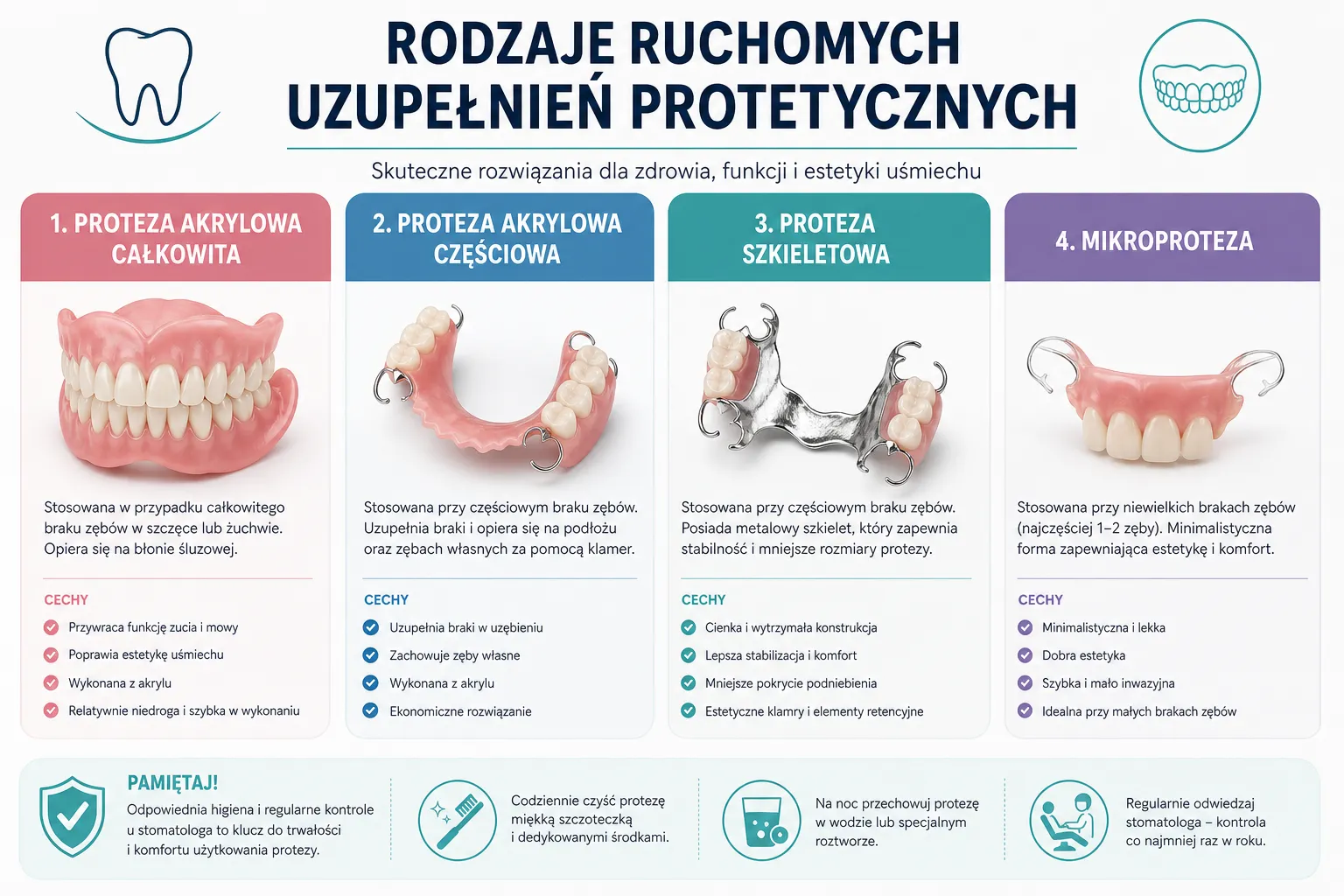
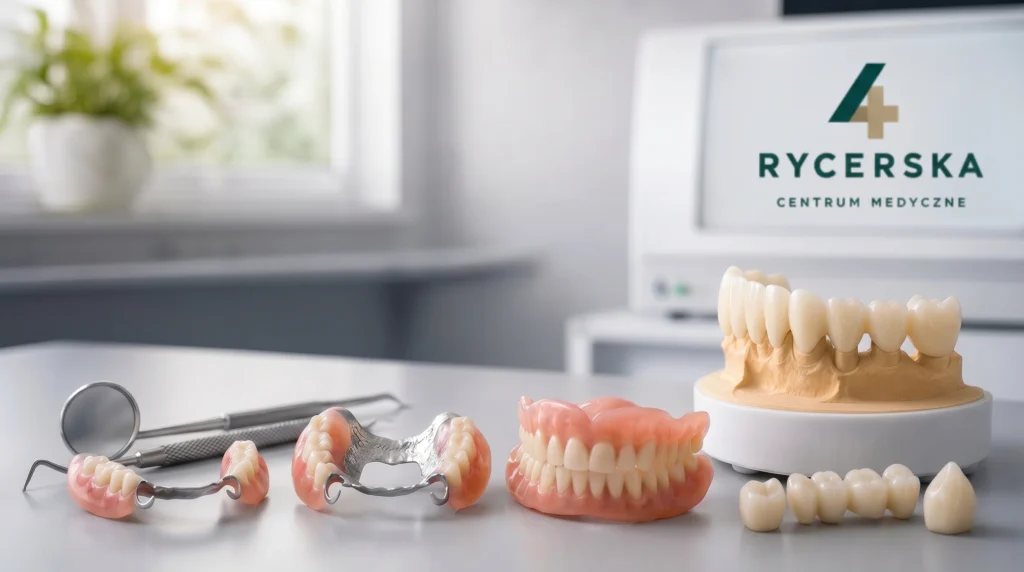
If you are interested in dental prostheses tailored to your needs, are looking for a safe place for comprehensive treatment, or want to check whether an acrylic prosthesis, a skeletal prosthesis, a micro-prosthesis, or an implant solution would be better, schedule a consultation at Rycerska 4 Medical Center. In one facility, in the center of Bytom, you will receive diagnostics, a treatment plan, support from multiple specialists, convenient registration, and financing options for procedures. This is care that truly leads the patient from problem to solution.
Rycerska 4 Medical Center in Bytom is a modern facility trusted by over 8,000 patients, offering a wide range of services, an experienced team of doctors and therapists, convenient online registration, telephone contact and via WhatsApp, as well as support in treatment financing and the possibility of purchasing gift vouchers for treatments at the clinic.
Explore the details of our offer in the following areas:
- comprehensive conservative dentistry
- comprehensive dental prosthetics
- dental surgery
- modern implantology
- comprehensive treatment under a microscope
- endodontics
- comprehensive dental prophylaxis
- professional hygienization
- comprehensive RTG and CBCT (tomography) diagnostics
- dental physiotherapy
- aesthetic medicine
- aesthetic facial physiotherapy
- general physiotherapy, pain therapy
- massages
| Procedure name | Price |
|---|---|
| Prosthetic consultation | 200 zł |
| Follow-up examination after prosthetic treatment | 150 zł |
| Whitening tray | 300 PLN |
| Relaxation splint | 500 zł |
| Acrylic micro-denture (1 – 2 teeth) | 600 zł |
| Partial acrylic denture | 1,000 zł |
| Full acrylic denture | 1,200 zł |
| Express denture fabrication | + 50% of the service value |
| Skeletal denture | 1,800 zł |
| Flexible denture | 1,800 zł |
| Splint-denture | 2,000 PLN |
| Precision attachment – slide, attachment (per piece) | 600 zł |
| Skeletal denture with precision attachments | 2,400 PLN |
| Immediate denture | 1,250 PLN |
| Denture repair without impression | 300 PLN |
| Denture repair with impression | 350 PLN |
| Flexible denture repair | 500 zł |
| Addition of a tooth to a denture | 350 PLN |
| Addition of another element (tooth, clasp) | 100 PLN |
| Denture relining | 500 zł |
| Denture reinforcement | 300 PLN |
| Cast metal post and core | 500 zł |
| Temporary crown | 150 zł |
| Temporary bridge | 300–400 PLN |
| Temporary acrylic bridge (per unit) | 250 PLN |
| Adhesive bridge on composite fiber | 550–650 PLN |
| Porcelain-fused-to-metal crown | 1,300 PLN |
| Bridge unit (porcelain-fused-to-metal) | 1,300 PLN |
| Porcelain crown on zirconia | 1,800 zł |
| Bridge unit (porcelain on zirconia) | 1,800 zł |
| Gingival porcelain (per unit) | 250 PLN |
| Bridge rest | 250 PLN |
| Porcelain veneer | 2,000 PLN |
| Composite veneer | 500–700 PLN |
| Cementing of a restoration from another clinic | 250 PLN |
| Sectioning of an old bridge or crown | 100–400 PLN |
| Procedure name | Price |
|---|---|
| Screw-retained crown on implant, full-contour zirconia (1 unit) | 2,500 - 3,000 PLN |
| Temporary crown on implant (1 unit) | 1,500 PLN |
| Full denture on a bar on two implants | from 8,000 PLN |
| Full denture on a bar on four implants | from 12,000 PLN |
| Overdenture on locators (depending on extent) | from 6,000 PLN |
| All-on-X full-arch prosthesis | individual quote |

See reviews
Looking for an ideafor a gift?

Select voucher type

Complete the details and pay for the order

Collect the voucher online or on-site