Daily oral hygiene
Learn more
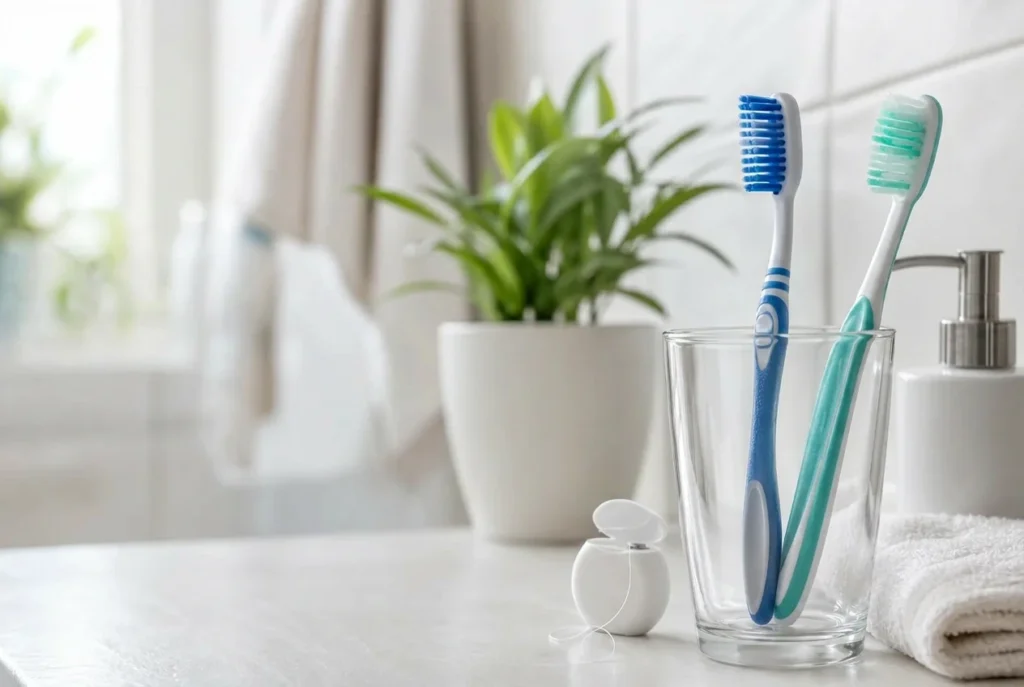
Daily oral hygiene is more than just a quick brushing in the morning and evening. It is effective prophylaxis against caries, gum disease, bad breath, sensitivity, and even problems that can eventually affect eating comfort, speaking, and self-confidence. If you care about a healthy smile and want to know how to properly look after your oral hygiene, below you will find a practical, modern, and structured guide.
For many patients from Bytom and the surrounding areas, it is not just prophylaxis that matters today, but also quick access to specialists, modern diagnostics, and treatment in one place. At Rycerska 4 Medical Center in Bytom, we combine dentistry, dental hygiene, RTG and CBCT tomography, dental physiotherapy, pain therapy, and aesthetic medicine, allowing us to view oral health more broadly – as an element of comfort, health, and daily well-being.
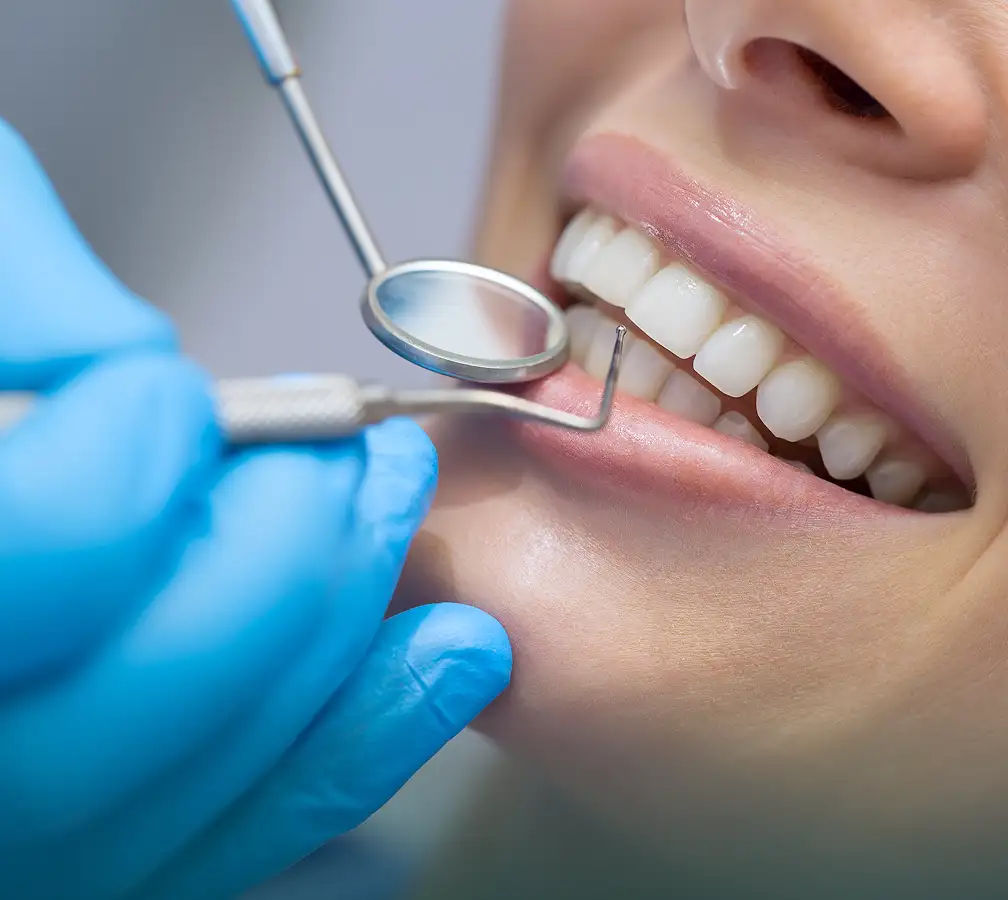
“Oral diseases affect nearly 3.7 billion people worldwide.” – World Health Organization (WHO)
This figure clearly shows that the problem does not only affect those who neglect their teeth. Often, the source of the trouble lies in small errors in daily routine, poorly chosen accessories, infrequent check-ups, or downplaying the first symptoms.
Why is oral hygiene so important?
A healthy oral cavity affects not only the condition of teeth and gums but also the quality of life. Pain, bleeding gums, sensitivity, or tooth loss can disrupt daily functioning, sleep, diet, and social relationships. Additionally, chronic inflammation in the mouth can place a burden on the entire body.
The key benefits of proper hygiene are:
- lower risk of caries,
- protection of gums and periodontium,
- fresher breath,
- reducing the buildup of plaque and tartar,
- keeping natural teeth in good condition for longer,
- lower risk of costly and extensive treatment in the future.
In practice, this means one thing: regular prophylaxis is simpler, cheaper, and much less stressful than treating advanced problems.
5 key rules for daily oral hygiene
While there are many recommendations, a few rules are of key importance for most adult patients.
| Rule | What to do | Why it is important |
|---|---|---|
| Brushing twice a day | Brush your teeth in the morning and evening for about 2 minutes | You remove bacterial plaque and food debris |
| Cleaning interdental spaces | Use floss, interdental brushes, or an irrigator | The toothbrush does not reach everywhere |
| Fluoride toothpaste | Select a product tailored to your needs | Fluoride supports enamel and caries prophylaxis |
| Tongue hygiene and mouth rinsing | Clean your tongue and use a well-selected mouthwash | You reduce bacteria and improve breath |
| Regular check-ups | Visit a dentist and hygienist every 6 months or as recommended | Problems can be detected at an early stage |
How to brush your teeth correctly?
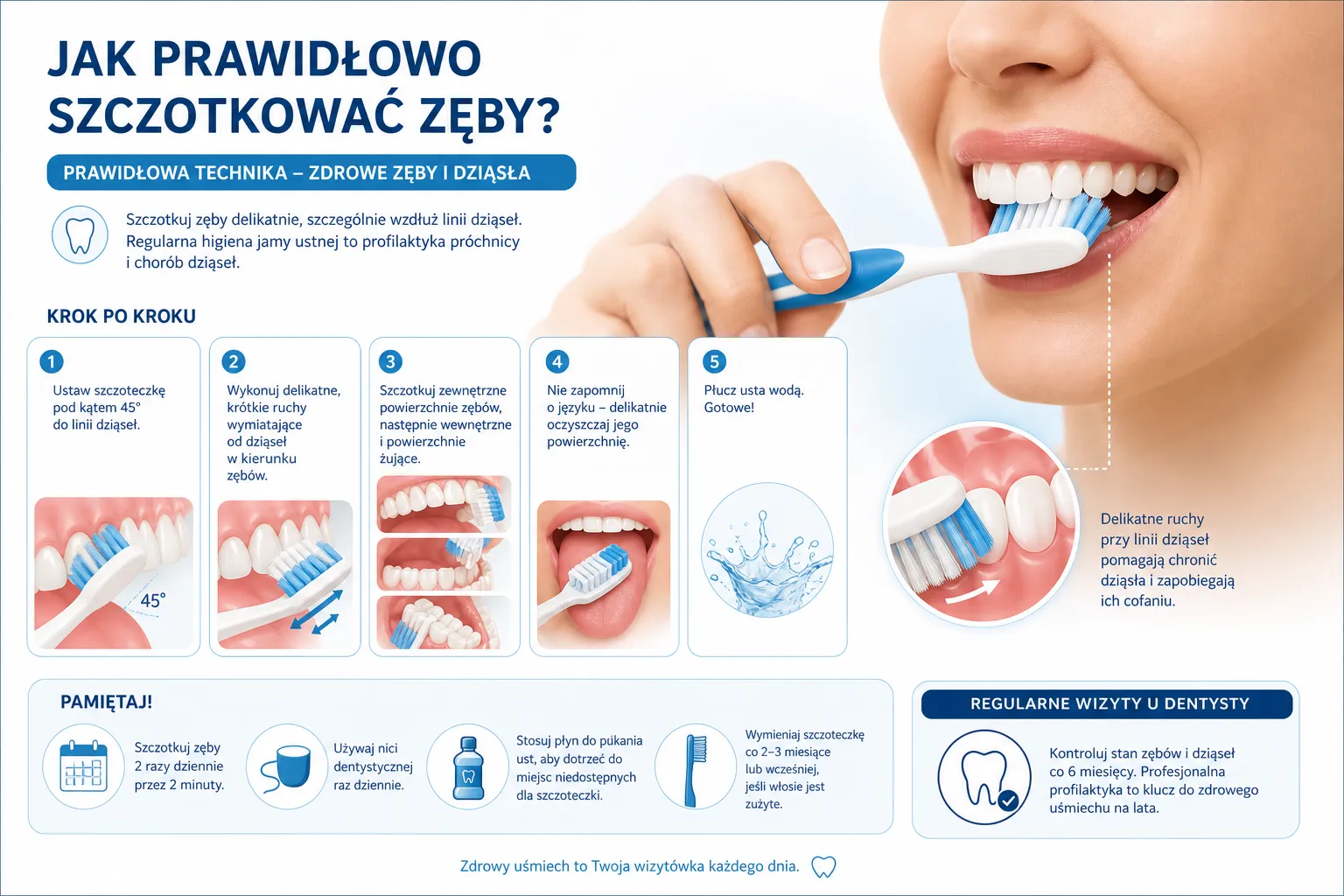
Brushing is the foundation, but simply "scrubbing" teeth is not enough. Technique, time, and gentleness are what matter.
Key rules for brushing
- brush your teeth at least twice a day,
- spend about 2 minutes brushing,
- cover all tooth surfaces,
- pay attention to the gum line,
- do not press the toothbrush too hard,
- replace your toothbrush or brush head regularly, usually every 3 months.
Which technique is best?
For adults, gentle sweeping motions or a method individually tailored by a dentist or hygienist are often recommended. Most importantly, avoid aggressive horizontal movements at the tooth necks, as this can promote enamel wear and gum irritation.
If you have braces, implants, bridges, hypersensitivity, or periodontal diseases, the technique should be selected individually. This is one of the areas where it is worth taking advantage of hygiene instruction in the office.
Which toothbrush and toothpaste to choose?
The choice of products matters, but it doesn't have to be complicated. The best accessories are those that are effective, safe, and tailored to your mouth.
Toothbrush: manual, electric, or sonic?
| Type of toothbrush | For whom | Advantages | What to watch out for |
|---|---|---|---|
| Manual | For people with good technique and regularity | Simple, accessible, inexpensive | Requires precision and self-control |
| Electric | For people wanting to improve brushing effectiveness | Facilitates thorough cleaning | The right tip must be selected |
| Sonic | For people with sensitive gums or those who prefer gentle cleaning | Gentle and effective | It is worth learning the correct movement |
In most cases, a soft-bristled toothbrush works well. Too hard bristles can damage the gums and increase hypersensitivity.
Which toothpaste?
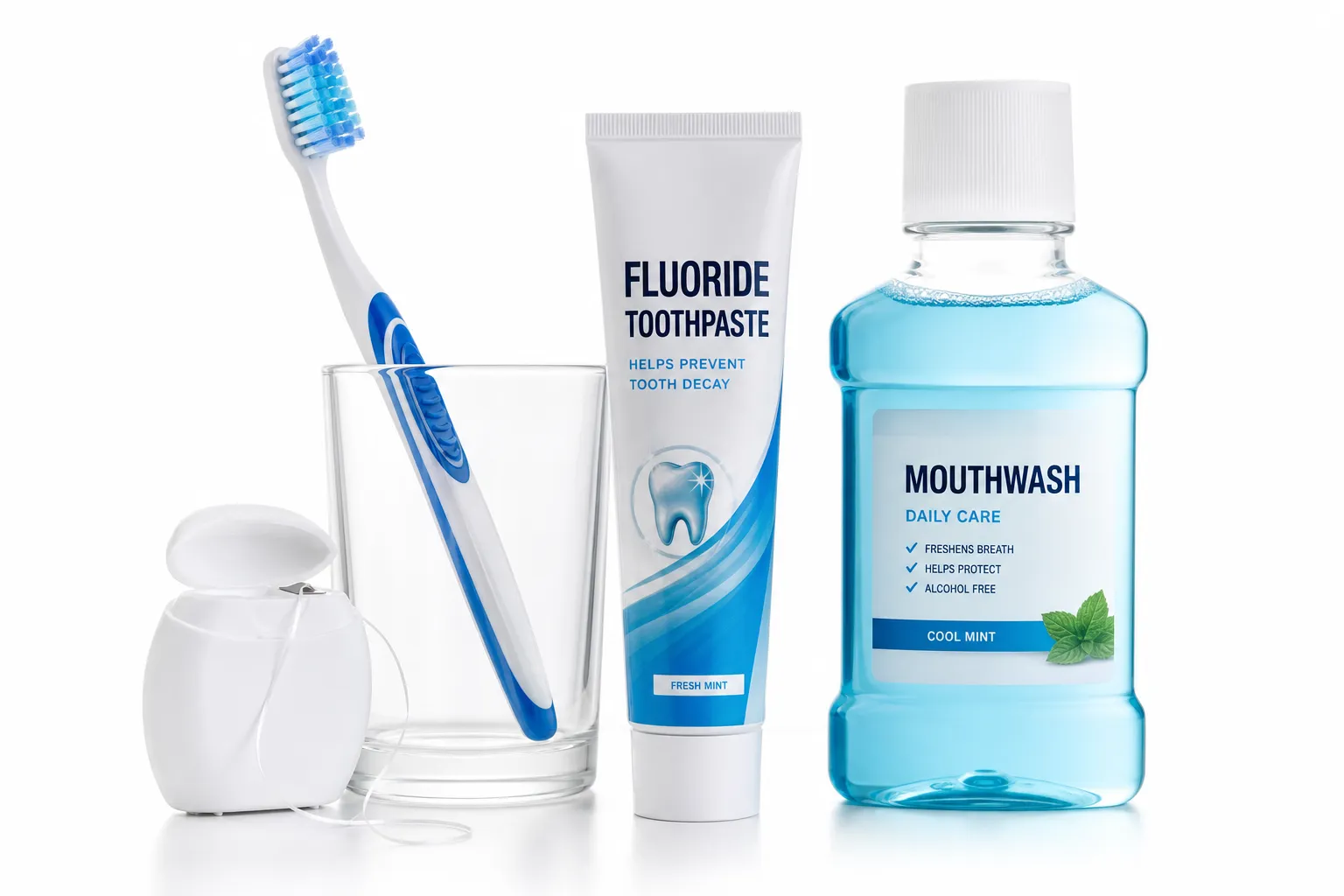
Most often, it is worth using a toothpaste with fluoride, as it supports enamel remineralization and helps protect against caries. In addition, you can choose a toothpaste for a specific problem:
- for hypersensitivity,
- when prone to gum inflammation,
- for people wearing braces,
- for smokers,
- whitening – but sensibly and not every day if the enamel is weakened.
If you don't know what to choose, it's best to ask during a check-up. At Rycerska 4 Medical Center in Bytom, we often help patients choose not only treatment but also a home hygiene routine tailored to their needs.
Why are flossing and interdental cleaning necessary?
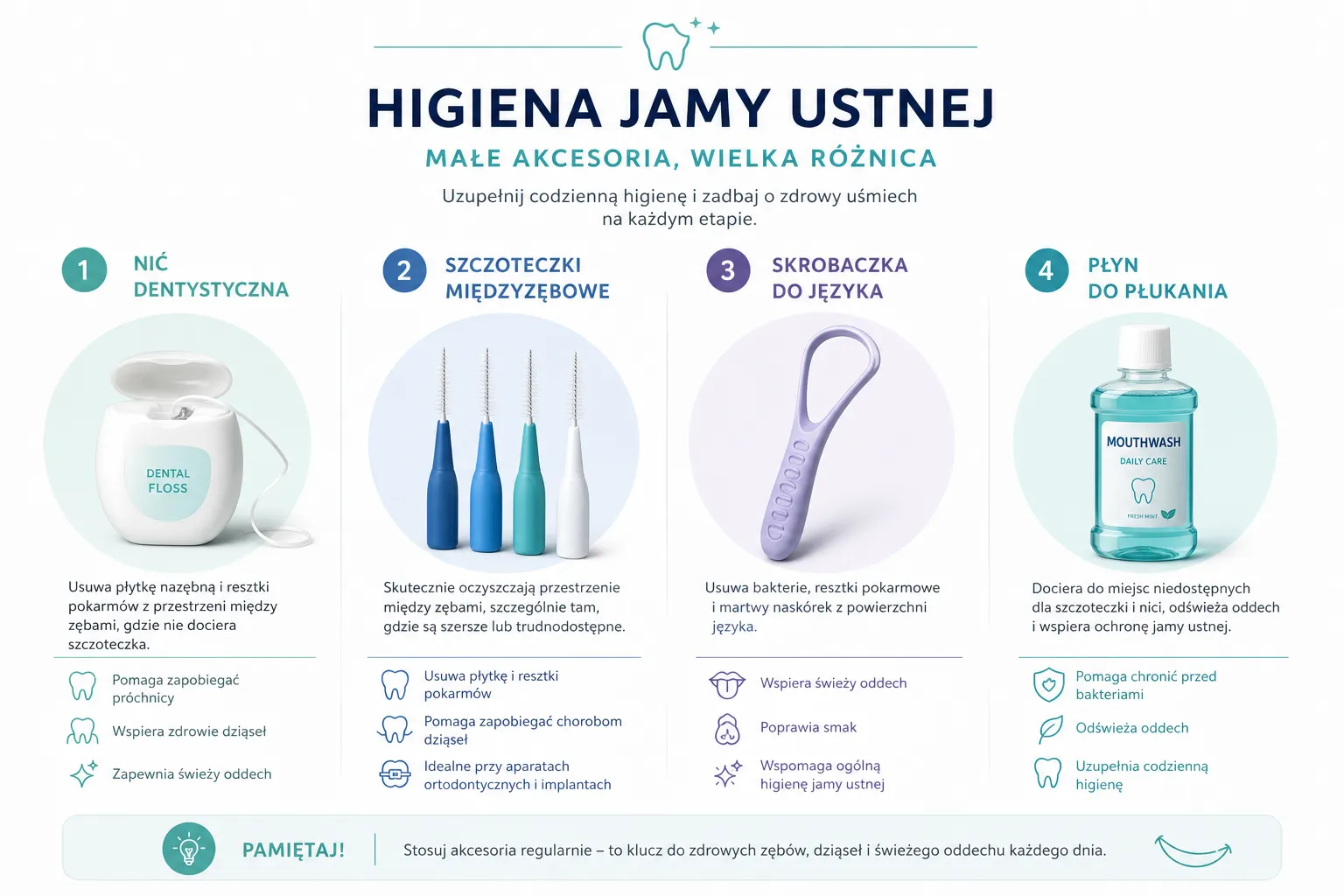
This is one of the biggest gaps in daily hygiene. Many people brush their teeth regularly but skip places that the toothbrush simply doesn't reach. Cleaning interdental spaces is essential for removing debris and plaque from places where the toothbrush itself does not reach effectively.
What to use to clean interdental spaces?
- with dental floss,
- with interdental brushes,
- with an irrigator,
- with special floss for bridges, braces, or implants.
How often?
Ideally every day, at least once a day – usually in the evening. If the spaces between the teeth are wider, interdental brushes can be more effective than floss alone.
Is mouthwash necessary?
Mouthwash does not replace brushing or flossing, but it can be a very good supplement to hygiene. It helps to freshen breath, reduce bacteria, support enamel, or have a soothing effect on the gums – depending on the composition.
When is it worth using a mouthwash?
- with an increased tendency to caries,
- for gum inflammation,
- after dental procedures, if recommended by the doctor,
- with orthodontic braces,
- when you want extra breath freshening.
It's best to choose alcohol-free preparations, especially if you are prone to dry mouth or irritation.
Tongue hygiene shouldn't be forgotten
Bacteria, food debris, and plaque also accumulate on the surface of the tongue. This is a common cause of bad breath. Cleaning the tongue takes a few seconds and makes a big difference.
For cleaning, you can use:
- tongue scrapers,
- toothbrushes with a suitable cleaning surface,
- the delicate back part of some brush heads.
Most common oral hygiene mistakes
1. Brushing for too short a time
Brushing your teeth for 20–30 seconds does not allow for a thorough cleaning of all surfaces.
2. Too much pressure
It does not clean better and can damage the gums and enamel.
3. Skipping interdental spaces
This is a common cause of "between-teeth" caries and gum inflammation.
4. Using an ill-fitting toothbrush
Bristles that are too hard or a head that is too large can make effective and safe brushing difficult.
5. Lack of regular check-ups
Even exemplary home hygiene does not remove tartar and is not a substitute for a dental check-up.
6. Brushing teeth immediately after an acidic meal
After acidic drinks or fruit, it is better to wait about 30–40 minutes to avoid exacerbating enamel erosion.
7. Ignoring bleeding gums
This is not "normal". Bleeding can be a sign of inflammation and requires assessment.
How to maintain oral hygiene when you have braces, implants, or bridges?
This is an important gap in many simple guides. Patients with prosthetic restorations or undergoing orthodontic treatment require more precise hygiene.
Braces
With braces, food debris and plaque accumulate more easily. What is needed:
- orthodontic toothbrush,
- single-tufted brush,
- interdental brushes,
- irrigator or special floss.
Implants and bridges
Here, cleaning the gingival areas and the spaces under bridge pontics is particularly important. Neglect can lead to inflammation of the tissues around the implants.
Bruxism, jaw tension, and facial pain
Patients who clench their teeth often need not only dental care but also dental physiotherapy support. At Rycerska 4 Medical Center in Bytom, we can combine diagnostics, treatment, and functional therapy in one facility, which is a great convenience for the patient.
Diet and oral health
Hygiene is not just about the toothbrush. How you eat and drink also matters.
What helps?
- regular meals instead of constant snacking,
- drinking water,
- products rich in calcium, phosphorus, and vitamin D,
- limiting sugary drinks and snacks.
What is harmful?
- frequent snacking,
- sugary drinks,
- acidic drinks and juices,
- cigarettes,
- excessive coffee and tea consumption combined with insufficient hygiene.
When to see a dentist sooner than in six months?
It is not worth waiting for a visit if any of the following occur:
- bleeding gums,
- toothache,
- hypersensitivity,
- bad breath despite brushing,
- tooth mobility,
- gum swelling,
- a chipped tooth,
- difficulty chewing,
- frequent temporomandibular joint pain or facial tension.
In such situations, prompt diagnostics are of great importance. At our facility in the center of Bytom, patients can benefit from comprehensive care, including consultation, professional cleaning, conservative treatment, microscopic treatment, prosthodontics, implantology, RTG and CBCT tomography, as well as physiotherapeutic support.
Professional cleaning – what home care cannot replace?
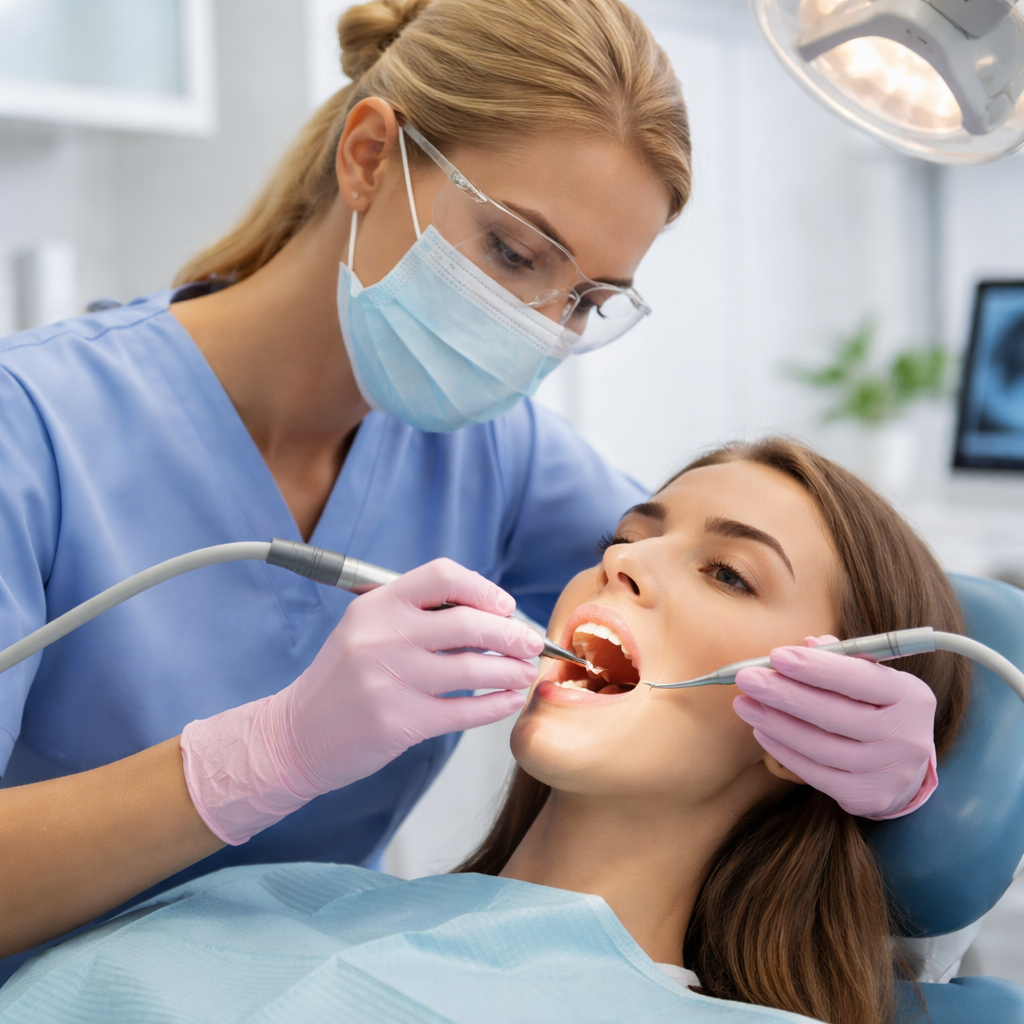
Even very thorough tooth brushing does not remove tartar. That is why professional dental hygiene treatment in the office is so important.
What can it include?
- scaling,
- sandblasting,
- polishing,
- fluoridation,
- oral hygiene instruction.
This is not just an aesthetic treatment. It is a real reduction in the risk of caries and periodontal diseases.
How often should check-ups and hygiene treatments be performed?
| Patient situation | Dental check-up | Professional dental cleaning |
|---|---|---|
| No major problems | Every 6 months | Usually every 6–12 months |
| Tendency for tartar or inflammation | Every 3–6 months | More frequently, as recommended |
| Braces | Regularly according to the treatment plan | Often every 3–6 months |
| Implants, bridges, periodontal diseases | Individually | Usually more often than standard |
Why is it worth taking a comprehensive approach?
Many patients today are looking not only for a good dentist but for a place where they can receive full care without running between different offices. This is especially important when the problem concerns not only a tooth but also the gums, bite, facial pain, muscle tension, or smile aesthetics.
At Centrum Medyczne Rycerska 4 in Bytom we offer exactly this approach:
- comprehensive care across multiple specialties in one facility,
- experienced team of doctors and therapists,
- modern RTG diagnostics and CBCT tomography,
- a wide range of services from dentistry to physiotherapy and aesthetic medicine,
- convenient online registration and contact via phone and WhatsApp,
- trust of over 8,000 patients,
- location in the center of Bytom,
- the option to purchase treatment vouchers,
- support in financing treatment and procedures.
Such a combination is convenient, safe, and allows for truly consistent patient management.
Summary
Proper oral hygiene is based on several simple yet consistently followed rules: thorough brushing, daily cleaning of interdental spaces, appropriately selected products, tongue hygiene, and regular check-ups. It is a daily routine that has a massive impact on the health, comfort, and appearance of your smile.
If you want to check if your hygiene is truly effective, schedule a dental hygiene appointment, consult about bleeding gums, sensitivity, biting problems, or pain in the facial area and temporomandibular joints, contact Centrum Medyczne Rycerska 4 in Bytom . In the center of Bytom, you will find a place where oral health meets modern diagnostics, specialist experience, and care tailored to you.
Centrum Medyczne Rycerska 4 in Bytom is the right address for you and your smile.
Rycerska 4 Medical Center in Bytom is a modern facility trusted by over 8,000 patients, offering a wide range of services, an experienced team of doctors and therapists, convenient online registration, telephone contact and via WhatsApp, as well as support in treatment financing and the possibility of purchasing gift vouchers for treatments at the clinic.
Explore the details of our offer in the following areas:
- comprehensive conservative dentistry
- comprehensive dental prosthetics
- dental surgery
- modern implantology
- comprehensive treatment under a microscope
- endodontics
- comprehensive dental prophylaxis
- professional hygienization
- comprehensive RTG and CBCT (tomography) diagnostics
- dental physiotherapy
- aesthetic medicine
- aesthetic facial physiotherapy
- general physiotherapy, pain therapy
- massages
| Procedure name | Price |
|---|---|
| Tartar removal in the hygiene office – scaling with polishing (2 dental arches) | 250 PLN |
| Tartar removal in the hygiene office – scaling + sandblasting with polishing (2 dental arches) | 300 PLN |
| Comprehensive tooth cleaning in a hygiene office – scaling + sandblasting + polishing + fluoridation | 350 PLN |
| Comprehensive teeth cleaning with braces in the hygiene office – 1 arch | 200 PLN |
| Procedure name | Price |
|---|---|
| Removal of dental tartar in a dental office – scaling with polishing (2 dental arches) | 300 PLN |
| Tartar removal in the dental office – scaling + sandblasting with polishing (2 dental arches) | 350 PLN |
| Comprehensive tooth cleaning in a dental office – scaling + sandblasting + polishing + fluoridation | 400 zł |
| Procedure name | Price |
|---|---|
| Varnishing of all teeth | 150 zł |
| Fissure sealing of permanent teeth (1 tooth) | 200 zł |
| Extended fissure sealing of permanent teeth – composite material (1 tooth) | 220 PLN |
| Procedure name | Price |
|---|---|
| General dental consultation, dental examination, issuing a prescription | 200 zł |
| Implant consultation with CBCT | 500 zł |
| Check-up for Regular Patients | 150 zł |
| Child's adaptation visit | 200 zł |
| Ineffective visit / lack of cooperation / inability to provide treatment | 250 PLN |
| Intervention / emergency / pain visit (shortened waiting time) | 300 PLN |
Basic rules of daily hygiene:
- daily cleaning of interdental spaces
- tongue cleaning
- using fluoride toothpaste
- regular dental check-ups
What helps maintain hygiene?
- drinking water,
- products rich in calcium, phosphorus, and vitamin D,
- limiting sugary drinks and snacks.
What harms and does not help?
- sugary drinks,
- acidic drinks and juices,
- cigarettes,
- excess coffee and tea with insufficient hygiene.

See reviews
Looking for an ideafor a gift?


Select voucher type

Complete the details and pay for the order

Collect the voucher online or on-site