Prosthetics
Learn more
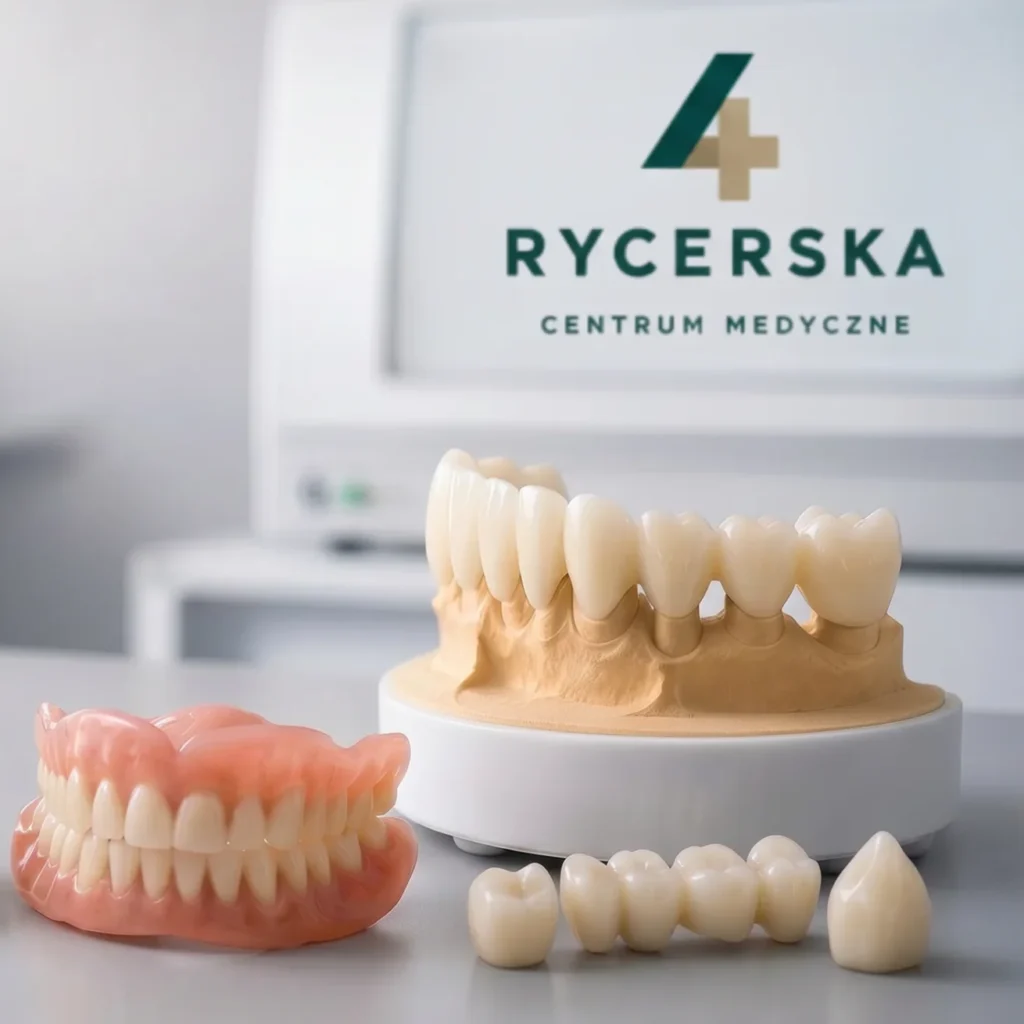
At the Rycerska 4 Medical Center in Bytom we take a broader view of prosthetics. We combine the experience of dentists from many specialties, modern RTG diagnostics and CBCT tomography, and individual treatment planning. This allows the patient to undergo the journey from consultation and diagnostics, through conservative, endodontic, or implantological treatment, to the final prosthetic reconstruction in one facility. This is a convenient solution especially for those who value private, comprehensive care and want to be treated efficiently, without traveling between different addresses.
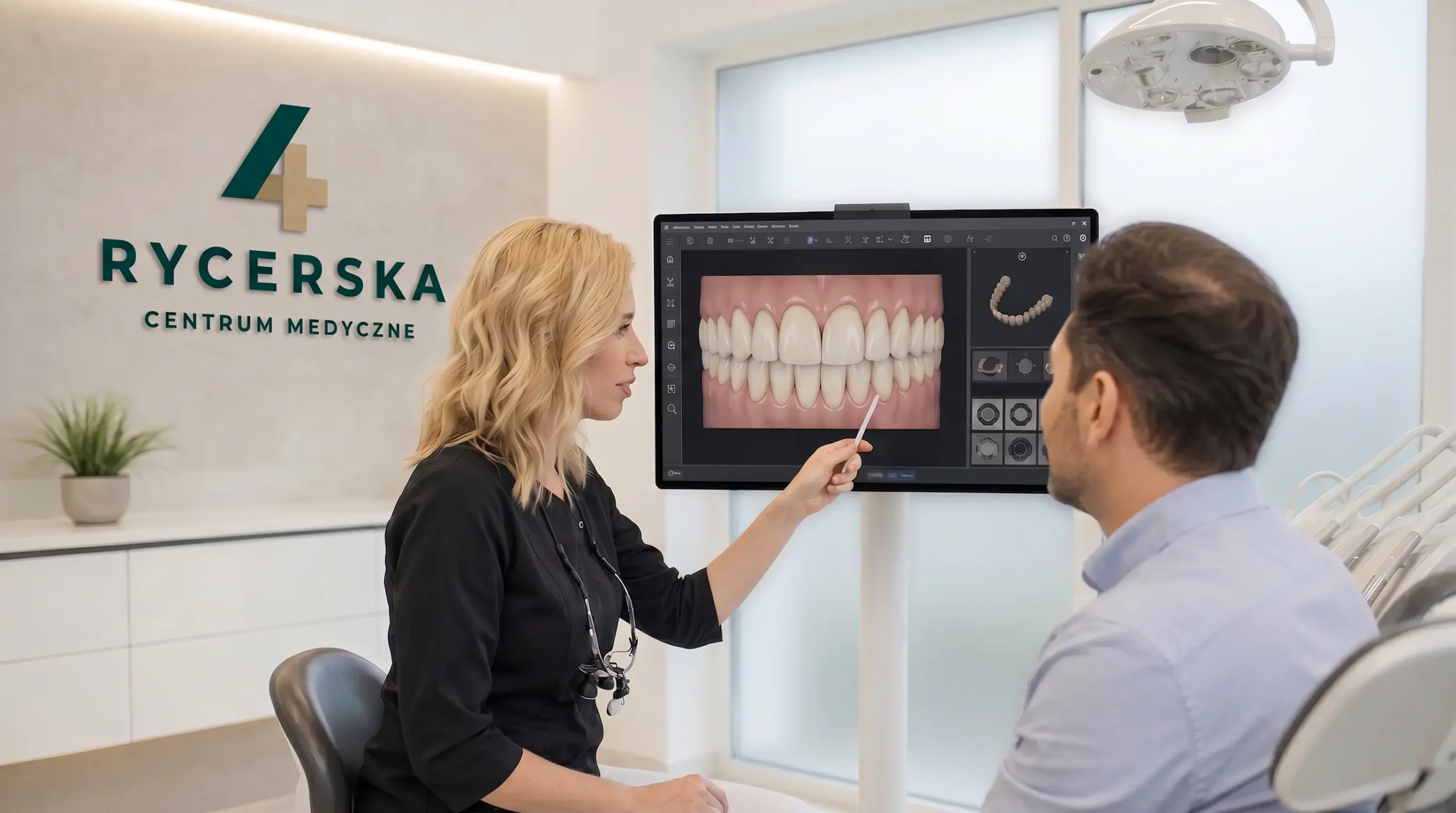
What is modern dental prosthetics?
Dental prosthetics deals with the reconstruction of missing or significantly damaged teeth. It includes both single reconstructions and the treatment of larger tooth deficiencies or even total edentulism. Contemporary prosthetics combines aesthetics with functionality, which is why a well-performed work should look natural and at the same time allow for free eating and speaking.
In practice, this means using various solutions, such as:
- prosthetic crown on a natural tooth or implant,
- prosthetic bridge for missing one or several teeth,
- veneers improving the aesthetics of front teeth,
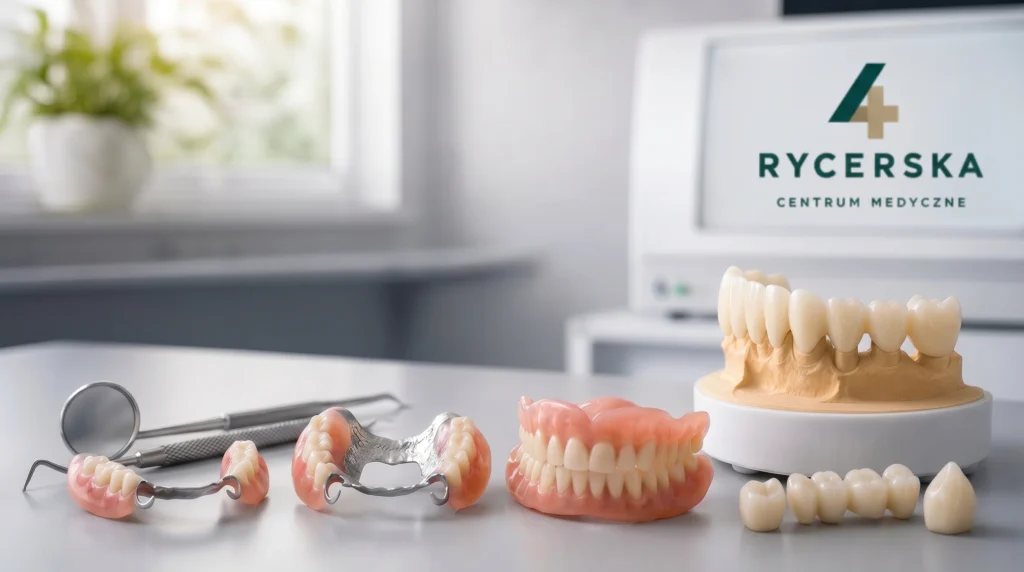
- acrylic denture or skeletal denture for larger gaps,
- complete denture for edentulism,
- complete denture on a bar on 2 or 4 implants,
- immediate denture performed in selected situations without a long wait for restoration.
- overdenture prosthesis on implant locators.
- full-arch prosthesis of the All-on-X type,
The best solution depends on the doctor's decision based on an assessment of the condition of the teeth, gums, bone, bite, aesthetic expectations, and the patient's budget.
Why you should not delay the restoration of missing teeth?
In popular opinion, aesthetics are often emphasized as the primary disadvantage of missing teeth; the progressive degradation of the oral cavity resulting from delayed treatment is less frequently mentioned. Yet, it is this degradation that is crucial for the patient.
Missing even a single tooth can lead to:
- shifting of adjacent teeth,
- deterioration of occlusal contacts,
- overloading of the remaining teeth,
- difficulty chewing food,
- changes in the temporomandibular joint,
- bone atrophy at the site of the gap,
- deterioration of facial features with significant tooth loss.
Important
"Tooth loss significantly impacts oral health-related quality of life, affecting chewing, speech, and overall well-being." – National Institute of Dental and Craniofacial Research (NIDCR)
This is precisely why modern prosthetic treatment should be planned not only for appearance but also for the long-term health of the entire stomatognathic system.
What does prosthetic treatment planning look like?
In a modern clinic, prosthetics do not start with the impression itself or the choice of material. They start with diagnostics and a consultation.
Consultation and assessment of patient needs
During the first visit, the doctor analyzes:
- condition of the teeth and periodontium,
- the extent of tooth gaps,
- occlusal conditions,
- smile aesthetics,
- habits, e.g., teeth grinding,
- the patient's expectations regarding appearance and comfort.
Diagnostic imaging
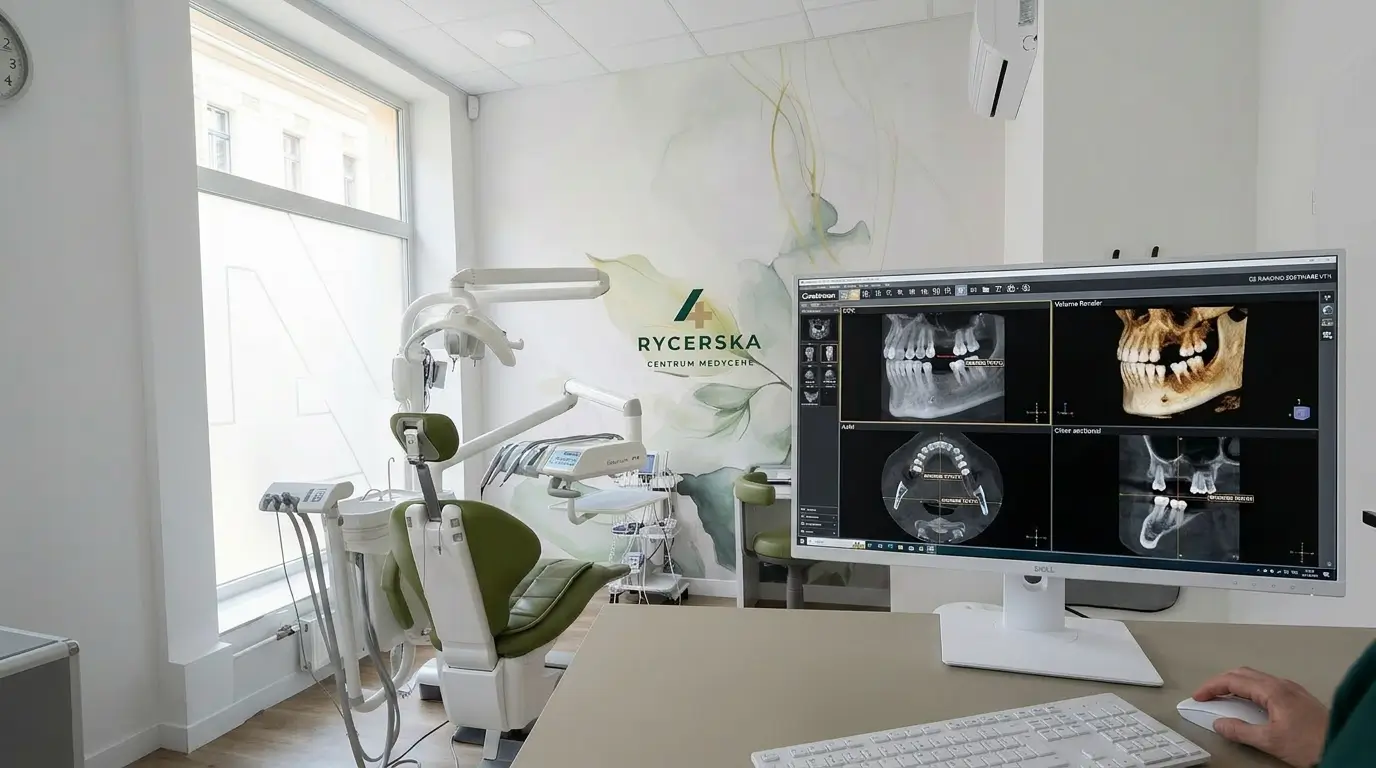
At Rycerska 4 Medical Center in Bytom, access to modern on-site diagnostics is of great importance. RTG and CBCT tomography help to accurately assess roots, bone volume, tissue condition, and restoration possibilities. This is especially important when planning crowns, bridges, and implant-based work.
Preparatory treatment
Before the final restoration is created, sometimes it is necessary to perform:
- caries treatment,
- root canal treatment under a microscope,
- hygienization,
- extraction of non-restorable teeth,
- implantological treatment,
- therapy for occlusal overloading,
- support from dental physiotherapy for muscle tension and joint problems.
This is a significant advantage of a multi-specialty facility. The patient does not have to coordinate treatment in different places themselves – the entire process can be planned coherently by a team of collaborating experts.
The most commonly used prosthetic solutions
Prosthetic crown – when is it the best choice?
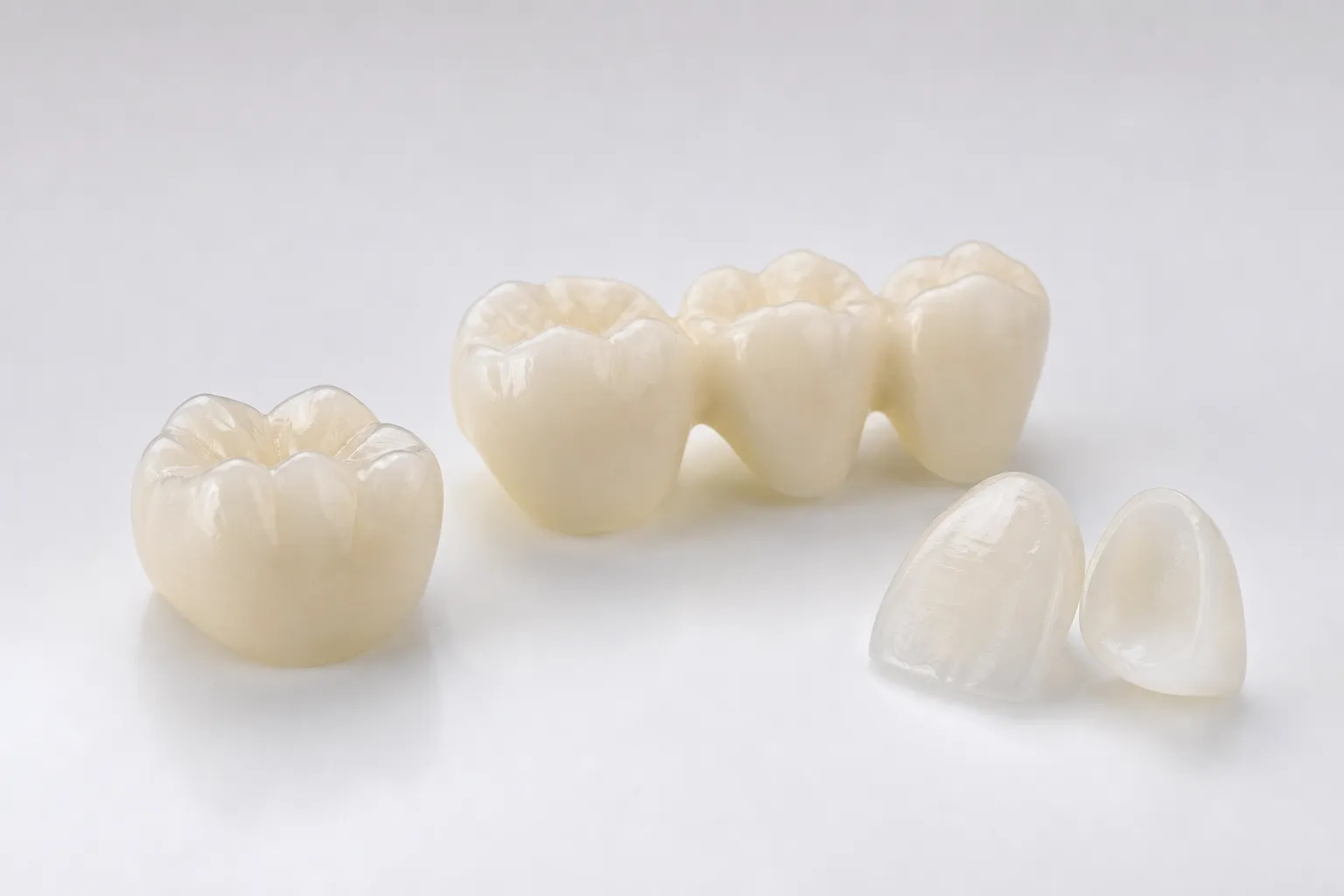
A prosthetic crown is a restoration covering a tooth that is damaged, weakened after root canal treatment, or requiring aesthetic and functional improvement. Its task is to restore the natural shape, height, and strength of the tooth.
Crowns are used, among others, when:
- the cavity is too extensive for a standard filling,
- a tooth after endodontic treatment requires strengthening,
- there is a need to improve the aesthetics of a single tooth,
- reconstruction on an implant is necessary.
All-ceramic and zirconia crowns
In modern prosthodontics, ceramics and zirconium dioxide are of particular importance. Patients commonly ask for “cerkon,” referring to aesthetic and durable zirconia restorations. Zirconia, or zirconium dioxide, is a material valued for its durability, biocompatibility, and excellent aesthetic effect.
Zirconia crowns work well in both the anterior and posterior zones. They allow light to pass through well, so they do not produce a “dead” effect and can faithfully imitate natural enamel.
Dental bridge – reconstruction of a missing tooth without a removable denture
A dental bridge replaces one or more missing teeth, using adjacent teeth or implants as support. It is a fixed solution, making it more comfortable for many patients than a classic removable denture.
A bridge can be a good choice when:
- a single tooth or several adjacent teeth are missing,
- the abutment teeth are strong enough,
- the patient does not qualify for implantation or wishes to choose a different treatment path,
- the patient wishes to quickly restore chewing function.
Contemporary bridges are designed with great precision and, when properly planned, can last for many years.
Veneers – when smile aesthetics are important
Although veneers are mainly associated with aesthetics, in a well-planned treatment, they are part of modern prosthodontics. They are used to improve the shape, color, proportions, and harmony of the anterior teeth.
Veneers are effective for:
- discoloration resistant to whitening,
- chipping and wear of the incisal edges,
- small diastemas,
- the need to improve the symmetry of the smile.
Removable dentures – modern and more comfortable than before
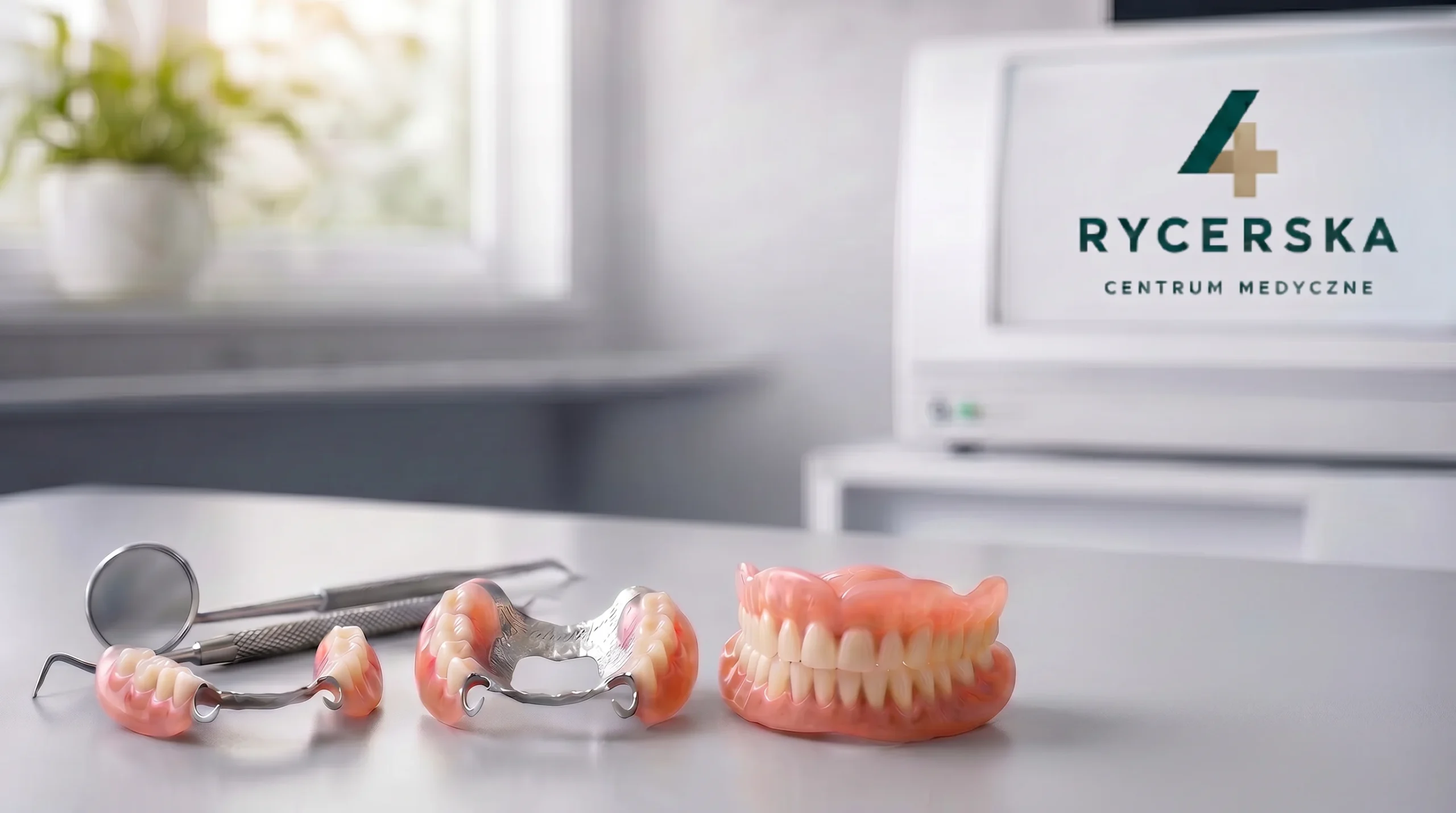
For many patients, they remain an important and effective solution.
Acrylic denture
An acrylic denture is a classic form of reconstruction for extensive tooth loss or edentulism. It can be partial or complete. Today, it is designed with greater precision than in the past, and when properly fitted, it improves aesthetics, speech, and chewing.
Skeletal denture
A skeletal denture is more stable and usually more comfortable than classic tissue-borne dentures. Thanks to its metal structure, it distributes chewing forces better and can provide greater comfort for patients with partial tooth loss.
Full denture
A full denture is used for patients with complete edentulism. Modern manufacturing techniques allow for better restoration of facial features, lip support, and the proportions of the lower face.
Immediate denture
An immediate denture is a solution prepared before tooth extraction and provided to the patient immediately after the procedure or shortly thereafter. This avoids a long period without teeth, which is of great psychological and social importance.
Implant prosthetics – comfort and modernity
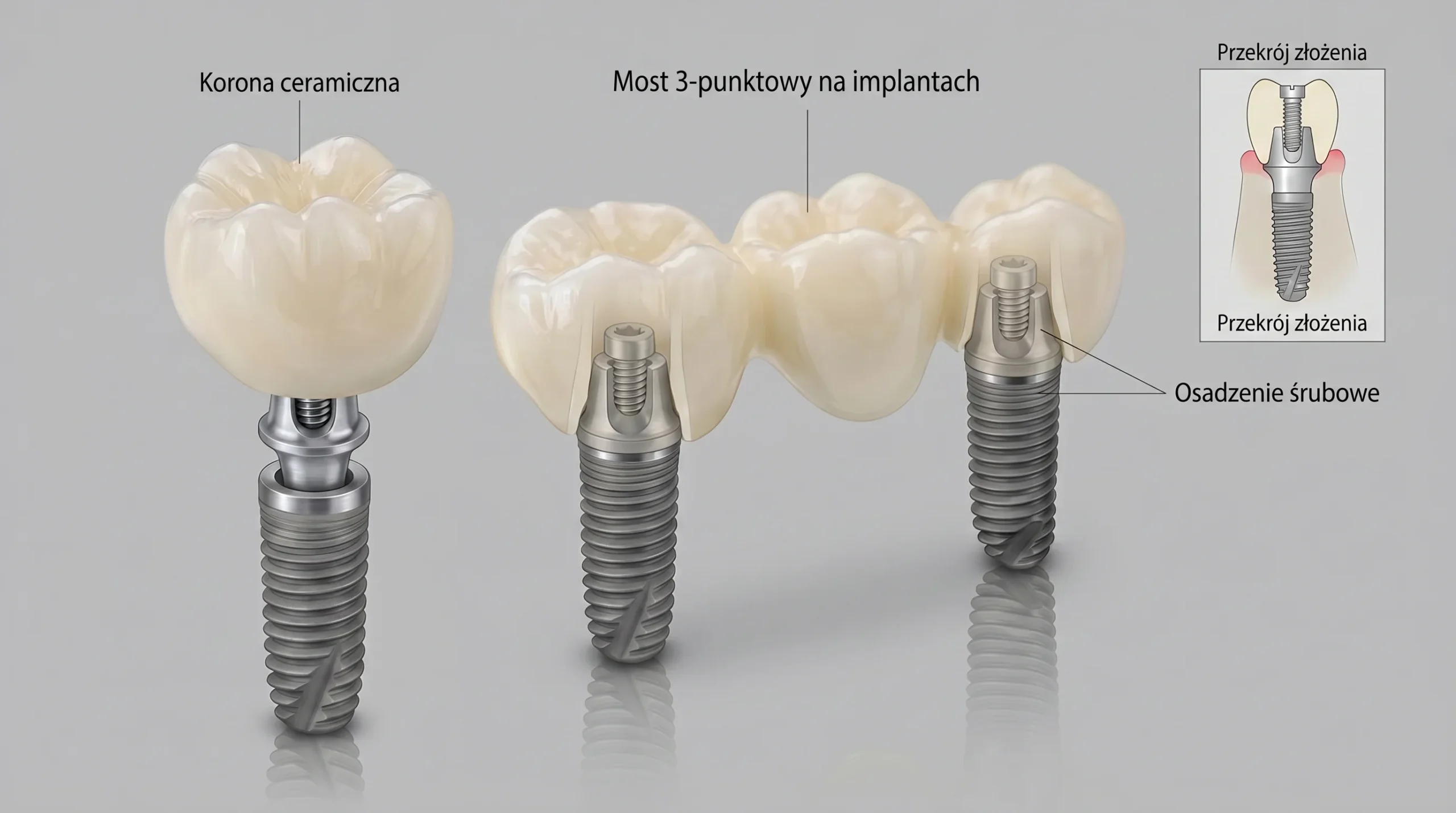
If bone conditions and general health permit, implants are one of the most modern foundations for prosthetic reconstruction. Single crowns, bridges, and even stabilized full dentures can be placed on implants.
The greatest advantages of such a solution are:
- very good stability,
- no need to grind down adjacent teeth,
- limiting bone loss,
- high comfort of use,
- natural aesthetic effect.
W Centrum Medycznym Rycerska 4 w Bytomiu such treatment can be planned comprehensively – from CBCT diagnostics and implantology to the final prosthetic work and subsequent follow-up care.
How to choose the right solution?
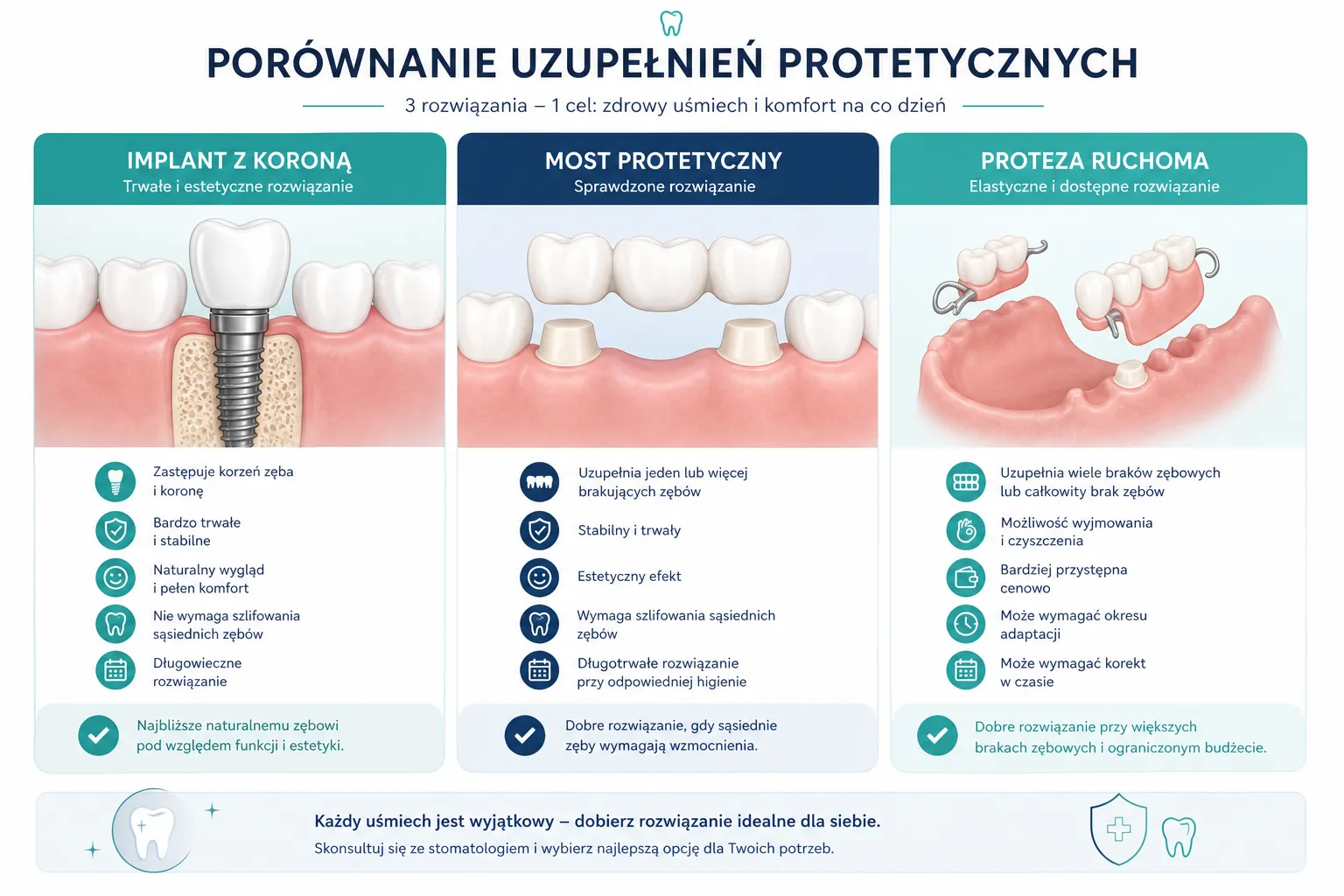
Comparison of options,
| Solution | For whom | Main advantages | Things to keep in mind |
|---|---|---|---|
| Prosthetic crown | For a severely damaged tooth that can still be saved | Protects the tooth, restores aesthetics and function | Requires proper tooth preparation |
| Dental bridge | In cases of one or several missing teeth | Fixed solution, rapid improvement of function | Often requires support from abutment teeth |
| Acrylic denture | In cases of extensive tooth loss or edentulism | Accessibility, wide range of applications | May require an adaptation period |
| Skeletal denture | For partial gaps | Better stability and comfort than classic dentures | Requires appropriate conditions in the oral cavity |
| Full denture | In cases of total edentulism | Restores aesthetics and function | Regular check-ups and adjustments are necessary |
| Implant-supported work | For patients expecting maximum stability | High comfort, natural feel | Requires diagnostics and qualification |
Does every prosthetic restoration look natural?
Many patients ask this question, especially if they have bad experiences with past prosthetic work. The good news is that modern prosthetics allow for a very natural effect – provided there is a proper treatment plan.
The naturalness of the appearance is influenced by, among others:
- the color and translucency of the material,
- tooth proportions,
- smile line,
- the relationship between teeth and gums,
- matching the facial features,
- proper bite function.
That is why a comprehensive perspective is so important at Rycerska 4 Medical Center in Bytom. If necessary, prosthetic treatment can be supplemented with professional cleaning, occlusion treatment, dental physiotherapy, and even aesthetic medicine or aesthetic facial physiotherapy procedures. Thanks to this, the final effect can be more harmonious, not only within the teeth but across the entire face.
Prosthetics and jaw pain, muscle tension, and the temporomandibular joint
This is an area often avoided and rarely discussed. Meanwhile, a misaligned bite, missing teeth, and chronic overloading can exacerbate:
- masticatory muscle pain,
- neck and facial tension,
- joint clicking,
- tooth wear,
- morning headaches.
Therefore, modern prosthetics should not operate in isolation from function. In a facility that combines dentistry with physiotherapy, it is possible to better assess whether the patient only needs tooth reconstruction or broader support in pain therapy or work with tensions and ailments within the face and jaw.
How much does modern prosthetic dentistry cost?
Each case is different and is therefore priced individually, as the final cost depends on:
- the type of restoration,
- the number of teeth being restored,
- the selected material,
- the need for preparatory treatment,
- possible implantation,
- the complexity of the case.
The best way to determine the final and binding price is a consultation and the preparation of an individual treatment plan. At Rycerska 4 Medical Center in Bytom, patients can count on not only a thorough discussion of the possibilities but also support in financing the procedures. This is important if the treatment requires major reconstruction and is to be spread out in a way that is comfortable for the budget.
How to care for crowns, bridges, and dentures?
The long-term durability of prosthetic work depends not only on the material but also on daily hygiene and regular check-ups.
Key principles
- brushing teeth at least twice a day,
- using dental floss, interdental brushes, or an irrigator,
- regular professional cleaning,
- follow-up visits as recommended,
- protection against overloading if bruxism occurs,
- proper cleaning of removable dentures.
Well-executed prosthetics can serve for many years, but require patient cooperation and regular care.
Why choose Rycerska 4 Medical Center in Bytom?
In prosthetics, it's not just the 'after' effect that counts, but the entire journey towards it. That's why patients from Bytom and the surrounding area are increasingly looking for a place where they can receive full support – from diagnostics to treatment and post-therapy care.
Centrum Medyczne Rycerska 4 is distinguished by:
- comprehensive multi-specialty care in one facility,
- experienced team of doctors and therapists,
- modern RTG diagnostics and CBCT tomography,
- a wide range of services from dentistry and implantology to physiotherapy and aesthetic medicine,
- convenient online registration and contact via phone and WhatsApp,
- trust of over 8,000 patients,
- location in the center of Bytom,
- the option to purchase treatment vouchers,
- support in treatment financing.
This approach will be especially appreciated by those who wish to be treated privately, comfortably, and without compromises in quality.
Summary
Modern dental prosthetics today offers much more than just filling gaps in the dentition. It allows for the restoration of aesthetics, everyday comfort, proper chewing function, and often improved well-being and self-confidence. Whether a single prosthetic crown, a prosthetic bridge, an acrylic denture, a skeletal denture, a full denture, or an advanced implant-based restoration is needed – the key is proper planning and treatment tailored to the individual.
If you are looking for a place that combines modern dentistry, diagnostics, experience, and a multi-specialty approach,
Rycerska 4 Medical Center in Bytom is a modern facility trusted by over 8,000 patients, offering a wide range of services, an experienced team of doctors and therapists, convenient online registration, telephone contact and via WhatsApp, as well as support in treatment financing and the possibility of purchasing gift vouchers for treatments at the clinic.
Explore the details of our offer in the following areas:
- comprehensive conservative dentistry
- comprehensive dental prosthetics
- dental surgery
- modern implantology
- comprehensive treatment under a microscope
- endodontics
- comprehensive dental prophylaxis
- professional hygienization
- comprehensive RTG and CBCT (tomography) diagnostics
- dental physiotherapy
- aesthetic medicine
- aesthetic facial physiotherapy
- general physiotherapy, pain therapy
- massages
Click for more about modern prosthetics
FAQ
What are the modern dentures available now?
expand and learn more
Modern solutions include skeletal dentures, well-fitted acrylic dentures, implant-stabilized dentures, and aesthetic permanent restorations such as bridges and crowns. The choice depends on the number of missing teeth, bone conditions, and expected comfort.
How much does a modern denture cost?
expand and learn more
The cost depends on the type of work, material, number of missing teeth, and whether preliminary treatment is required. It is best to determine it during a consultation, when the doctor can propose an individual treatment plan and discuss financing options.
What are the latest prosthetic methods?
expand and learn more
The latest methods include digital intraoral scanning, CAD/CAM design, zirconium oxide crowns and bridges, all-ceramic veneers, and prosthetic restorations on implants. Thanks to them, treatment is more precise, comfortable, and predictable.
What are the modern dentures without a palate?
expand and learn more
Most often, these are selected skeletal dentures or implant-based solutions that do not cover the entire palate and are more comfortable to use. Final qualification depends on anatomical conditions and the number of remaining teeth.
| Procedure name | Price |
|---|---|
| Prosthetic consultation | 200 zł |
| Follow-up examination after prosthetic treatment | 150 zł |
| Whitening tray | 300 PLN |
| Relaxation splint | 500 zł |
| Acrylic micro-denture (1 – 2 teeth) | 600 zł |
| Partial acrylic denture | 1,000 zł |
| Full acrylic denture | 1,200 zł |
| Express denture fabrication | + 50% of the service value |
| Skeletal denture | 1,800 zł |
| Flexible denture | 1,800 zł |
| Splint-denture | 2,000 PLN |
| Precision attachment – slide, attachment (per piece) | 600 zł |
| Skeletal denture with precision attachments | 2,400 PLN |
| Immediate denture | 1,250 PLN |
| Denture repair without impression | 300 PLN |
| Denture repair with impression | 350 PLN |
| Flexible denture repair | 500 zł |
| Addition of a tooth to a denture | 350 PLN |
| Addition of another element (tooth, clasp) | 100 PLN |
| Denture relining | 500 zł |
| Denture reinforcement | 300 PLN |
| Cast metal post and core | 500 zł |
| Temporary crown | 150 zł |
| Temporary bridge | 300–400 PLN |
| Temporary acrylic bridge (per unit) | 250 PLN |
| Adhesive bridge on composite fiber | 550–650 PLN |
| Porcelain-fused-to-metal crown | 1,300 PLN |
| Bridge unit (porcelain-fused-to-metal) | 1,300 PLN |
| Porcelain crown on zirconia | 1,800 zł |
| Bridge unit (porcelain on zirconia) | 1,800 zł |
| Gingival porcelain (per unit) | 250 PLN |
| Bridge rest | 250 PLN |
| Porcelain veneer | 2,000 PLN |
| Composite veneer | 500–700 PLN |
| Cementing of a restoration from another clinic | 250 PLN |
| Sectioning of an old bridge or crown | 100–400 PLN |
| Procedure name | Price |
|---|---|
| Screw-retained crown on implant, full-contour zirconia (1 unit) | 2,500 - 3,000 PLN |
| Temporary crown on implant (1 unit) | 1,500 PLN |
| Full denture on a bar on two implants | from 8,000 PLN |
| Full denture on a bar on four implants | from 12,000 PLN |
| Overdenture on locators (depending on extent) | from 6,000 PLN |
| All-on-X full-arch prosthesis | individual quote |

See reviews
Looking for an ideafor a gift?


Select voucher type

Complete the details and pay for the order

Collect the voucher online or on-site