The difference between a Stomatologist and a Dentist

Learn more
Many people type the phrase “difference between a stomatologist and a dentist” into a search engine because they simply want to know whom to book an appointment with: is a “dentist” someone for teeth, and a “stomatologist” for the entire oral cavity? This is a understandable question – especially if you are looking for a proven specialist, need quick diagnostics, or want comprehensive treatment in one place.
The shortest answer is: in Poland, a dentist and a stomatologist are in practice the same doctor. The difference mainly concerns naming, the history of the professional title, and the colloquial use of these words. For the patient, the most important thing is not whether the doctor introduces themselves as a dentist or a stomatologist, but the doctor's specialization and experience, as well as the diagnostic and therapeutic possibilities offered by the facility.
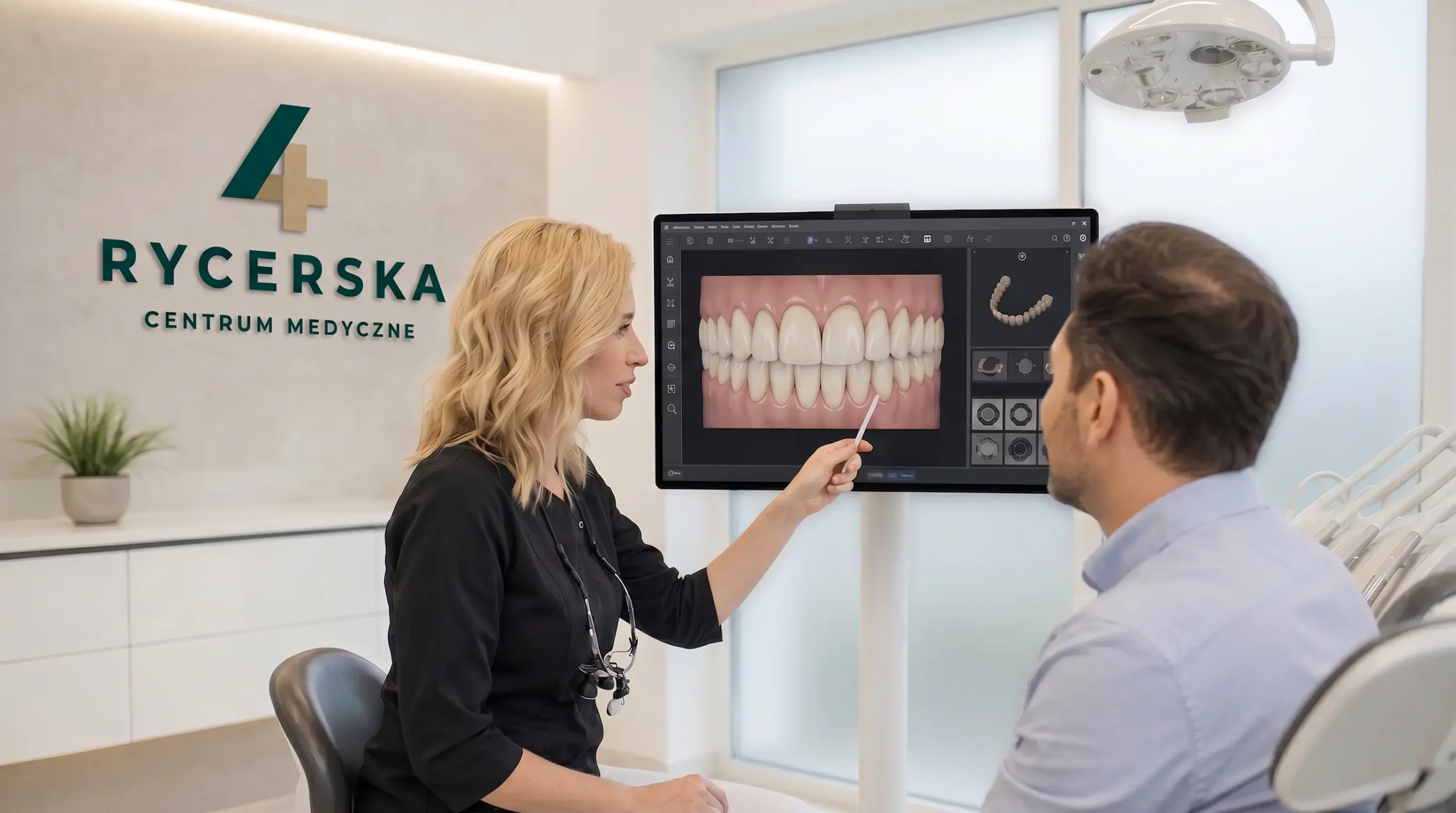
Dentist vs. stomatologist – the shortest explanation
If you are looking for a practical answer, remember this:
- dentist = stomatologist in everyday use,
- today, the official professional title in Poland is lekarz dentysta,
- it is not the name that determines the scope of treatment, but the qualifications, experience, and possible specialization of the doctor.
In practice, this means that when you have a toothache, a problem with your gums, need root canal treatment, an implantology consultation, or RTG/CBCT diagnostics – you can start with a visit to a dentist.
Where did the confusion with these names come from?
There are three sources of misunderstanding:
- etymology of the words,
- changes in regulations in Poland,
- colloquial habits of patients.
Etymology: “stoma” and “dens”
The word stomatology derives from Greek:
- stoma – mouth,
- logia – science.
In turn, the word dentist comes from the Latin:
- dens – tooth.
Theoretically, one could conclude that “stomatologist” sounds broader, while “dentist” focuses more on the teeth. However, today in Poland this distinction has no practical significance for the patient.
Legal changes in Poland
It was the regulations that caused the naming to change. Formerly, the term dentist was used more often, later stomatologist appeared formally, and currently the official title is lekarz dentysta.
“In Poland, the official professional title for a stomatologist is ‘lekarz dentysta’. According to the Act on the Professions of Physician and Dentist, the practice of the profession of dentist consists in providing health services in the field of diseases of the teeth, oral cavity, facial part of the skull, and adjacent areas.” – standardyprawa.pl
It is very important: a dentist does not only deal with teeth, but also with the broader area of the oral cavity and adjacent structures.
Is a dentist a doctor?
Tak – dentysta jest lekarzem.
To obtain this title and the right to practice the profession, one must:
- complete studies in the field of medicine and dentistry,
- complete the required training or internship,
- pass the appropriate exams,
- obtain the right to practice the profession.
This means that a person seeing patients as a lekarz dentysta has the formal competence to diagnose and treat diseases of the teeth, oral cavity, and adjacent areas.
Does a stomatologist treat something different than a dentist?
No – the word “stomatologist” itself does not mean a different scope of treatment than “dentist” today. Differences only appear when we talk about specializations.
It is the specialization that matters, not the name
Terms such as the following should speak more to the patient than the title itself:
- conservative dentistry,
- endodontics,
- prosthodontics,
- implantology,
- orthodontics,
- dental surgery,
- periodontology,
- pediatric dentistry.
It is the doctor's specialization or practice profile that determines whether they primarily deal with caries treatment, root canal treatment, restoration of missing teeth, treatment of malocclusions, or surgical procedures.
Dentist, stomatologist, dental doctor – comparison in a table
| Term | Does it refer to the same profession? | Is it correct? | What does it mean for the patient? |
|---|---|---|---|
| Dentist | Yes | Yes, colloquially and commonly | A doctor specializing in the treatment of teeth and the oral cavity |
| Stomatologist | Yes | Yes, colloquially and historically | The same as dentist in everyday use |
| Dentist | Yes | Yes, formally | Official professional title in Poland |
Make an appointment with a stomatologist/dentist when you have:
- toothache,
- hypersensitivity,
- carious cavities,
- bleeding gums,
- swelling in the oral cavity,
- tooth mobility,
- a problem with a wisdom tooth,
- a missing tooth or a prosthetic treatment plan,
- the need for an RTG or CBCT tomography,
- tension and ailments within the temporomandibular joint.
Look for a comprehensive facility when you need more than one consultation
In practice, many adult patients from Bytom and the surrounding area do not just need a single "filling," but a complete treatment plan:
- diagnostics,
- consultations with several specialists,
- conservative treatment,
- dental hygiene,
- treatment under a microscope,
- prosthodontics or implantology,
- and sometimes also dental physiotherapy support.
This is why it is so important to seek treatment in a place that combines various areas of therapy. At Rycerska 4 Medical Center in Bytom, patients can benefit from comprehensive care from many specialties in a single facility – from dentistry and RTG/CBCT diagnostics, through implantology and prosthodontics, to dental physiotherapy, pain therapy, massages, and aesthetic medicine.

What procedures does a dentist perform?
The scope of treatment depends on the doctor's competencies and the facility's equipment, but most often a dentist deals with:
Conservative dentistry
- caries treatment,
- tooth restoration,
- replacing leaking fillings,
- prevention.
Endodontics
- root canal treatment,
- treatment under a microscope,
- saving teeth from extraction.
Diagnostics
- clinical examination,
- treatment planning,
- referring for RTG,
- evaluating panoramic images and CBCT tomography.
Periodontics and gum treatment
- periodontal assessment,
- treating inflammations,
- supporting periodontitis therapy.
Dental surgery
- tooth extraction,
- treating inflammatory lesions,
- preparation for implantation.
Prosthodontics and implantology
- restoring missing teeth,
- crowns, bridges, and dentures,
- planning restoration on implants.
The most common mistake patients make: looking for a “dentist” instead of a solution to the problem
Patients often type into Google: “good dentist”, “stomatologist Bytom”, “root canal dentist”, “implants”, “jaw pain”. It is natural. The problem is that simply choosing the specialist's title does not solve the problem if the facility does not provide a full treatment path.
Example:
- you have a toothache,
- it turns out that an RTG is needed,
- then root canal treatment under a microscope,
- prosthetic restoration,
- and finally, a consultation with a dental physiotherapist due to temporomandibular joint overload.
If you have to look for each of these services separately, treatment takes longer and becomes more stressful. Therefore, at the Rycerska 4 Medical Center in Bytom, we focus on consistent care and the cooperation of a team of doctors and therapists.
Are dentist and stomatologist the same in other countries?
Not always. In different countries, naming systems and the division of competences may look different. However, from the perspective of a patient in Poland, the most important thing is that:
- the formal profession is dentist,
- the words dentist and stomatologist are commonly used interchangeably,
- the scope of treatment and the specialist's experience are what matter.
How to choose a good stomatologist or dentist?
Instead of focusing solely on the title, check 6 practical aspects.
1. On-site diagnostics
Ideally, the facility offers RTG and CBCT tomography. This speeds up the diagnosis and treatment plan.
2. Multi-specialization team
The more complex the problem, the more important the cooperation between the stomatologist, implantologist, prosthodontist, surgeon, and physiotherapist.
3. Comprehensive treatment
It is worth choosing a place where everything, from consultation to procedure, takes place at a single address.
4. Transparent communication
The patient should know:
- what is wrong with them,
- what the treatment options are,
- how long the therapy will last,
- what the costs and stages are.
5. Convenient registration
Being able to contact us in the way that is most convenient for you is of great importance:
- via online registration,
- by phone,
- via WhatsApp.
6. Patient trust
If over 8,000 patients have already trusted the facility, it is a strong signal that the treatment and service process is well-refined.
Why are regular visits more important than the specialist's title itself?
Many patients wonder about the terminology but postpone the visit itself. Meanwhile, for oral health, regularly monitoring the condition of the teeth and gums is much more important.
The WHO emphasizes the importance of regular dental check-ups, which help detect caries early and enable the implementation of appropriate treatment.
Regular visits allow you to:
- detect caries at an early stage,
- preventing inflammation,
- implement treatment faster,
- avoiding pain, swelling, and more costly procedures.
Dentist vs stomatologist in the practice of a patient from Bytom
For a resident of Bytom and the surrounding area, what matters most is that:
- not wasting time traveling between facilities,
- access to diagnostics and treatment in one place,
- receive a therapy plan tailored to real needs,
- benefit from the help of specialists outside of traditional dentistry as well.
At Centrum Medyczne Rycerska 4 in Bytom , located near the
Market Square, we combine exactly this model of care. This is especially important when dental problems are combined with:
-
- facial pain,
- muscle tension,
- bruxism,
- temporomandibular joint overload,
- the need to improve the aesthetics of the smile and face.
Therefore, patients can benefit from not only dentistry but also physiotherapy, pain therapy, massages, facial aesthetic physiotherapy, and aesthetic medicine.
When is a visit to the dentist alone not enough?
This is another important aspect that is often overlooked. Sometimes a "dental" problem does not end with the tooth.
Examples:
| Symptom | Possible need |
|---|---|
| Pain while biting | bite diagnostics, conservative treatment, sometimes endodontics |
| Jaw or temple pain | dental consultation + dental physiotherapy |
| Missing teeth | implantology or prosthetics |
| Worn teeth, muscle tension | dental treatment + overload therapy |
| Desire to improve smile aesthetics | aesthetic dentistry, prosthetics, sometimes aesthetic medicine |
In such situations, the availability of various specialists in one medical center is a huge advantage.
Is it worth being guided only by price?
No. Price is important, but it should not be the only criterion. In dentistry, the following are also significant:
- the quality of diagnostics,
- treatment precision,
- the equipment used,
- the team's experience,
- the possibility of staged treatment,
- patient safety and comfort.
At Centrum Medyczne Rycerska 4 in Bytom patients can also benefit from support in financing procedures, which helps plan treatment without putting it off "for later".
Do dentists and stomatologists only see people with a toothache?
No. This is a common myth. It is also worth visiting a dentist when:
- nothing hurts yet, but you want to have a check-up,
- you are planning aesthetic treatment,
- you are considering implants or prosthetics,
- you want to assess the bone condition before treatment,
- you have tension within the face or jaw area,
- you need dental hygiene,
- you want to take care of your smile preventatively.
This is important for aesthetic and functional procedures
Modern patient care increasingly combines:
- health,
- function,
- aesthetics,
- comfort of everyday life.
That is why it is so important to have a place that understands the patient holistically, and not just 'from one tooth'.
How to address a stomatologist?
The safest and most natural way:
- Doctor,
- Doctor,
- or formally: Doctor.
In everyday communication, there is no need to wonder whether to say 'dentist' or 'stomatologist'. Both terms are understood.
Summary: what is the difference between a stomatologist and a dentist?
The most important conclusion is simple:
- in Poland, a stomatologist and a dentist are the same in the patient's practice,
- the official title is lekarz dentysta,
- the actual scope of help is determined by specialization, the doctor's experience, and the facility's capabilities.
So if you are looking for help not only 'at the dentist', but in a place that will provide you with comprehensive diagnostics, treatment, and support from many specialists, choose a facility that looks beyond just a single symptom.
At Rycerska 4 Medical Center in Bytom we offer:
- comprehensive care across multiple specialties in one facility,
- experienced team of doctors and therapists,
- modern RTG and CBCT tomography diagnostics,
- a wide range of services: from stomatology to physiotherapy and aesthetic medicine,
- convenient online registration , phone contact and via WhatsApp ,
- care from a place trusted by over 8,000 patients,
- location in the center of Bytom,
- the option to purchase treatment vouchers,
- support in treatment financing.
If you want to stop searching for 'whether a dentist or a stomatologist is better' and simply receive proper care – book a consultation at Rycerska 4 Medical Center in Bytom. It is the first step towards treatment that is simultaneously modern, convenient, and truly comprehensive.
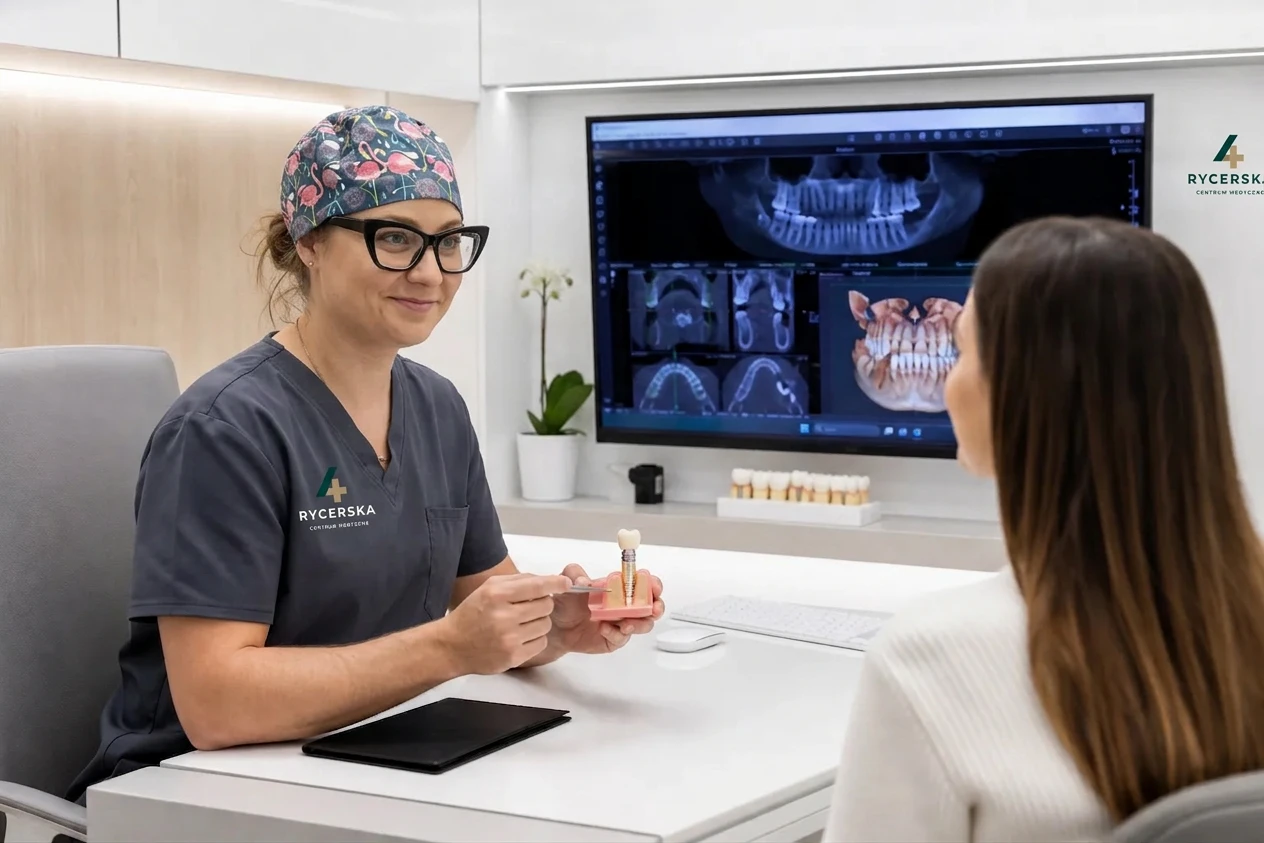
Rycerska 4 Medical Center in Bytom is a modern facility already trusted by over 8,000 patients, offering a wide range of services, an experienced team of doctors and therapists, convenient online registration, contact by phone and via WhatsApp, as well as support in financing procedures and the possibility of purchasing gift vouchers for treatments at the facility.
Explore the details of our offer in the field of:
- comprehensive conservative dentistry
- comprehensive dental prosthetics
- dental surgery
- modern implantology
- comprehensive treatment under a microscope
- endodontics
- comprehensive dental prophylaxis
- professional hygienization
- comprehensive RTG and CBCT (tomography) diagnostics
- dental physiotherapy
- aesthetic medicine
- aesthetic facial physiotherapy
- general physiotherapy, pain therapy
- massages
FAQ
Are a dentist and a stomatologist the same?
Click to expand and learn more
Yes, in Poland the terms dentist and stomatologist are used interchangeably and refer to the same profession. The formal professional title is currently lekarz dentysta.
Can you go to the dentist with laryngitis?
Click to expand and learn more
It depends on the severity of symptoms and the type of planned procedure. If you have an infection, fever, or severe symptoms, it is best to contact the facility before your visit so the doctor can assess whether the procedure should be postponed.
Can a pregnant woman go to the dentist without queuing?
Click to expand and learn more
In the public healthcare system, pregnant women are entitled to certain rights, but the rules for organizing visits depend on the facility. In practice, the most important thing is not to postpone dental treatment during pregnancy and to inform the doctor about the pregnancy beforehand.
What is the difference between a dentist and stomatology?
Click to expand and learn more
Dentist refers to the doctor, while stomatology is the name of the medical field. A patient usually says 'I am going to the dentist', but the treatment takes place within the field of stomatology.
How should you address a stomatologist?
Click to expand and learn more
The most natural and polite way to address them is: Doctor or Doctor. The terms 'dentist' and 'stomatologist' are correct, but in direct conversation, the form 'doctor' sounds most professional.

See reviews
Looking for an ideafor a gift?


Select voucher type

Complete the details and pay for the order

Collect the voucher online or on-site